

Apple will celebrate 50 years on April 1, and over the past half-century, it has developed the eight-bit personal computer Apple I, the Macintosh, the iPhone, Apple Watch, and AirPods, putting its technology into the pockets of about 1.5 billion people.
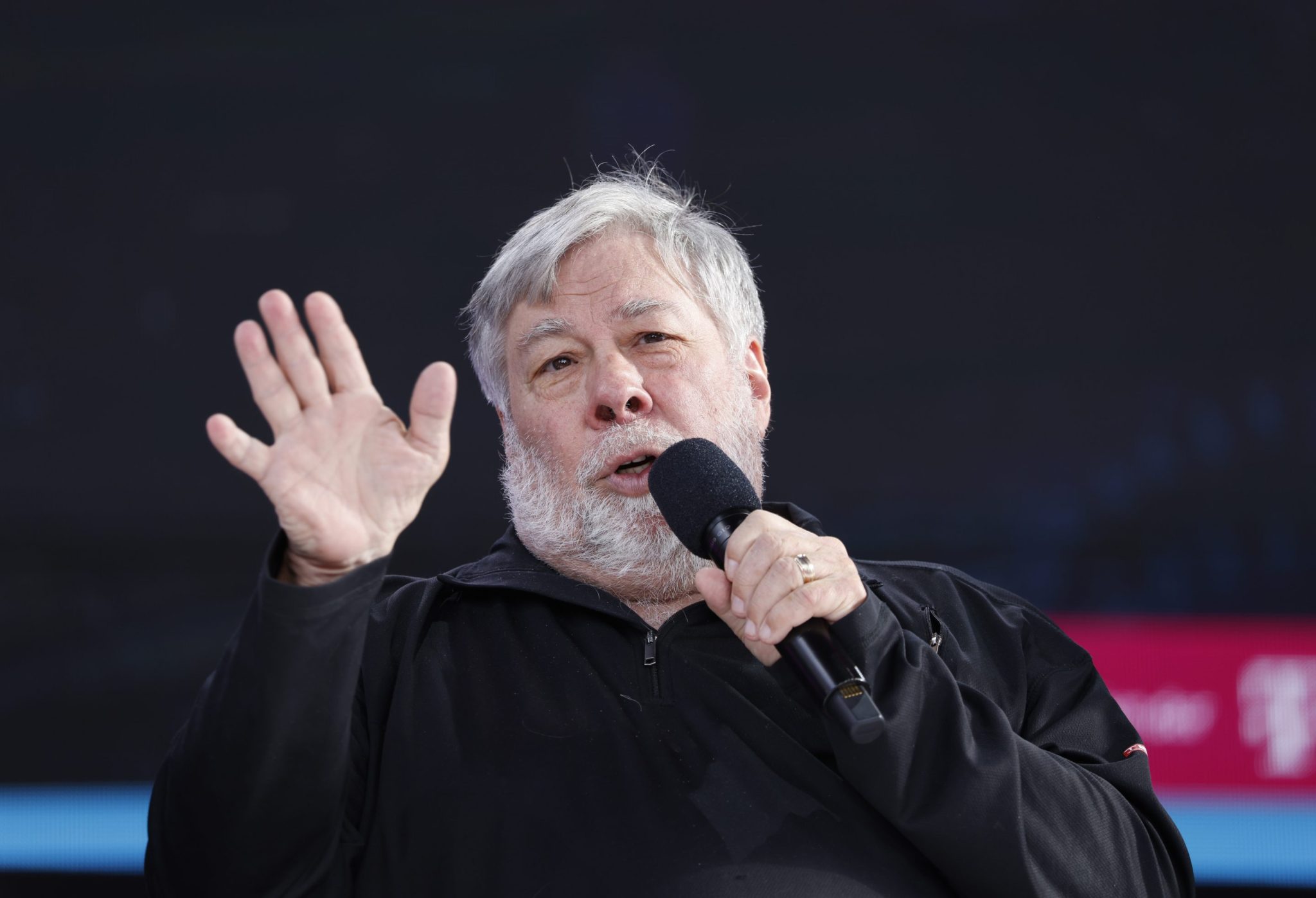
Cofounder Steve Wozniak, who made his mark in this new age of technology, would rather just touch grass.
“I really have disconnected from the technology quite a bit,” Wozniak said in a recent CNN interview. “And I believe that nature is much more important than what humans do.”
Wozniak was the innovator behind Apple, serving the company until 1985 and developing its first two computer models as well as the first Macintosh, which popularized the graphical user interface.
The breakthrough made PCs more accessible to nontechnical users, opening the doors to a mass audience. Despite the Woz’s contributions to the ubiquity of devices, he does not see the same value in the current big trend in technology.
“I don’t use AI much at all,” he said. “I often read things [AI produces], and they just sound too dry and too perfect, and I want something from a human being, and I’m disappointed a lot.”
Apple has largely sat out of the AI arms race occupying much of the tech sector. It devoted just $12.7 billion to AI capital expenditures in fiscal 2025, a figure that pales in comparison to the $300 billion that AI hyperscalers Microsoft, Amazon, and Alphabet collectively spent.
And instead of developing an in-house AI, Apple is powering its virtual assistant Siri with Google’s Gemini, taking advantage of another company’s tech.
Tech’s big names advocating for the analog life
Woz’s skepticism of AI is shared by a number of leaders. A survey of more than 6,000 senior executives in the U.S., the U.K., Germany, and Australia led by Stanford future-of-work whiz Nicholas Bloom, found nearly 70% of CEOs, CFOs, and other C-suite members use AI at work for less than an hour a week—and 28% don’t use the tech at all. About 7% of respondents reported using AI more than five hours in a typical workweek.
Still, AI use among top executives in the workplace is on the rise, with a January Gallup poll finding 69% of leaders used AI in the fourth quarter of 2025, up from less than 40% in mid-2023.
But even as AI gains momentum, a cadre of tech entrepreneurs—even those who are responsible for proliferating the increased use of AI tools and devices—are setting boundaries on screens at home.
“I think TikTok is entertainment, but it’s purely entertainment,” Chen said. “It’s just for that moment. Just shorter-form content equates to shorter attention spans.”
Tech billionaire Peter Thiel said in 2024 he allowed his two children only an hour and a half of screen time per week. Bill Gates, Snap’s Evan Spiegel, and Tesla’s Elon Musk have all similarly limited their children’s tech usage.
Their caution was backed up this week, when a jury found YouTube and Meta liable for the harm of young users in designing platforms with addictive features.
These concerns were even shared by Apple execs. When the iPad was released in 2010, then-CEO Steve Jobs, who founded the company alongside Wozniak, said his children had never used the device.
“We limit how much technology our kids use at home,” he told the New York Times.
Current Apple CEO Tim Cook said earlier this month he was concerned about how much people use AI. He added that technology is neither positive nor negative and that it’s in the hands of the inventor and user to determine its value.
“I don’t want people using [devices] too much,” he said in an interview with Good Morning America. “I don’t want people looking at the smartphone more than they’re looking in someone’s eyes. Because if they’re just scrolling endlessly, this is not the way you wanna spend your day. Go out and spend it in nature.”