


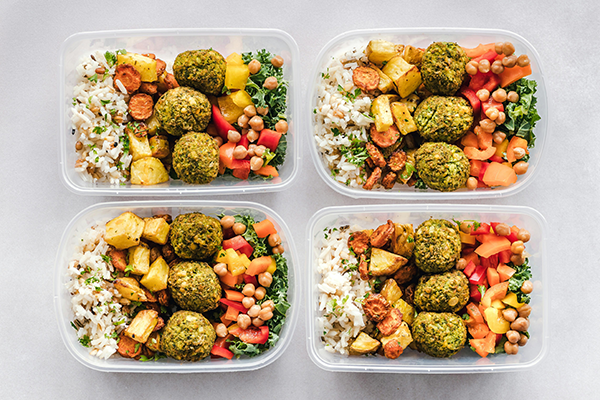
At the end of a long day, answering the question “What’s for dinner?” can feel like one more decision that you’d rather not make. AI can transform meal planning from just another task on your to-do list to an opportunity to organize and prepare meals at home with confidence, creativity, and efficiency. Whether your goal is to save time, improve your cooking skills, reduce food waste, meet specific nutrient targets, or decrease decision fatigue, AI will quickly become your preferred planning assistant.
Meal planning doesn’t have to mean rigid schedules or perfectly mapped‑out weeks. AI works just as well whether you love routine or prefer flexibility. You can use it to:
- Plan a full week of dinners
- “Shop your kitchen” last minute and create a meal from what you already have
- Use up leftovers in a creative way
- Find a recipe using a specialty condiment or seasoning
- Design meals and snacks around targeted nutrients like protein, fiber, or calcium
- Adapt individual recipes for preference, budget, time, or number of servings
- Get your family involved in choosing meals based on their preferences
Think of AI as a brainstorming partner that helps you see possibilities you might not have thought of on your own.
Tired of deciding what’s for dinner? Let AI help you plan meals, use up leftovers, and adapt recipes to fit your preferences. 🍽️ #MealPrep #AI Share on X
Before asking AI for ideas, think through your priorities and try to keep them realistic. Preparing even one more dinner per week at home is a win! Consider:
- The number of meals you want to cook
- The number of servings each meal should make
- How much time you have to spend preparing meals
- Which foods (e.g., proteins, vegetables, beans) you want to include
- Preferred cuisines and flavors
- Foods/ingredients you want to avoid/food allergies
- Your budget
- Cooking skill level
- Kitchen appliances you prefer to use
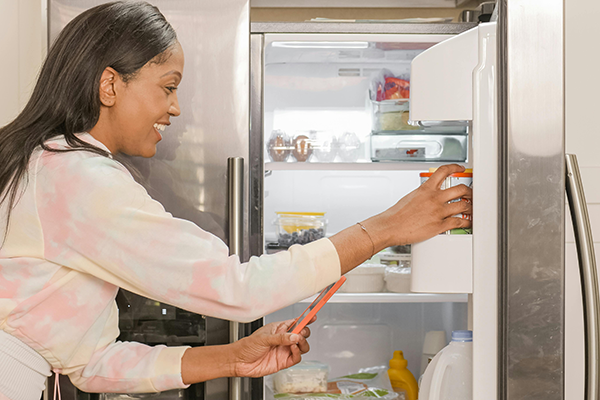
One of the most powerful ways to use AI is reverse meal planning, which prioritizes what you already have and what needs to be used up.
- Take 5–10 minutes to check your fridge, freezer, and pantry and list the ingredients you already have. You can even start by taking a few quick photos of shelves or drawers and ask AI to list the visible ingredients for you. Be sure to review and edit for accuracy and add missing items.
- Make note of produce, cooked foods, or open containers that should be used soon.
- Now ask AI to suggest meal ideas using what you have.
- Do you have a specialty ingredient you’re unsure how to reuse (like an obscure spice, paste, or sauce)? Ask AI to list a few recipes using it, and how it can be incorporated with other ingredients you have on hand.
AI can help you prep more efficiently. Ask AI:
- What can be pre‑washed, chopped, and seasoned a few days ahead?
- What’s a good meal to cook in advance and divide for weekday lunches?
- What are some staples (e.g., grains, beans, meats) that can be batch-cooked and used in different ways throughout the week?
AI can also help you design meals around nutrition goals (e.g., fiber, protein, calcium, omega-3 fatty acids). Here are a few ideas:
- Ask for meals that contain at least 30 grams of protein.
- Request swaps in a recipe to increase fiber.
- Prompt for snack ideas that contain at least 150 mg calcium.
Important reminder: Nutrient values from AI are only estimates. They’re a great starting point, but when accuracy matters, confirm using Nutrition Facts labels or a trusted database like USDA FoodData Central. For more on accuracy when tracking food, check out this blog.
You can also ask AI to adapt a recipe that you already found but isn’t quite right for you. Tell it what to preserve (e.g., flavor profile, cooking method, key nutrients). Then ask for what you’d like to change. For example:
- Dairy‑free, gluten‑free, or allergy‑friendly swaps
- Budget‑friendly substitutions
- Herb and spice alternatives
- Faster or simpler preparation methods
Remember, AI is a planning assistant, not a substitute for professional nutrition advice—especially for strict dietary needs. Consult a Registered Dietitian Nutritionist for more personalized recommendations, especially if you are trying to address specific medical conditions with your nutrition.
Before diving in, ask yourself:
- Does this sound like something I’d actually enjoy?
- Do the seasonings make sense together?
- Does the timing seem realistic?
- Could AI’s suggested substitution change cooking time or texture?
If something seems off, ask AI to explain and offer alternatives, or ask AI to find a similar recipe from a trusted source. And always check internal temperatures of cooked meat using a meat thermometer.

The real power of AI comes from feedback and iteration:
- Save prompts you like and reuse them weekly.
- Notice what worked—and what didn’t—and feed that back into your next plan.
- Use the same AI tool from week-to-week, so your history and preferences will be remembered.
- Track a nutrient of interest for 3-7 days to better understand your baseline.
Use the prompts below as inspiration and let AI’s assistance make the meal planning process feel lighter, faster, and more flexible.
- Plan 4 different dinners for the week that can feed 4 people, take less than 30 minutes each, and are budget friendly.
- Suggest 3 different dinners I can make from 5 pounds of chicken I grill on Sunday to feed my family throughout the week.
- Design a day of meals with about 30g protein per meal and 25–30g fiber/day. I dislike [foods].
- I have leftover [protein]+ [veg]+ [grain]. Give me 3 “remix” ideas with simple steps.
- Create a grocery list for these recipes [link to recipes], grouped by store section, and flag pantry staples I might already have.
- Adapt this recipe to be dairy-free and higher fiber. Provide substitutions and updated steps: [paste recipe].
- Using the fridge photo below that shows ingredients I have, propose meals and estimate which items will expire first.
- Give me 10 snack ideas with at least 150 mg calcium and at least 10 g protein without much prep.
Sheet Pan Lemon Herb Chicken and Vegetables
Makes 4 servings
PRINT RECIPE
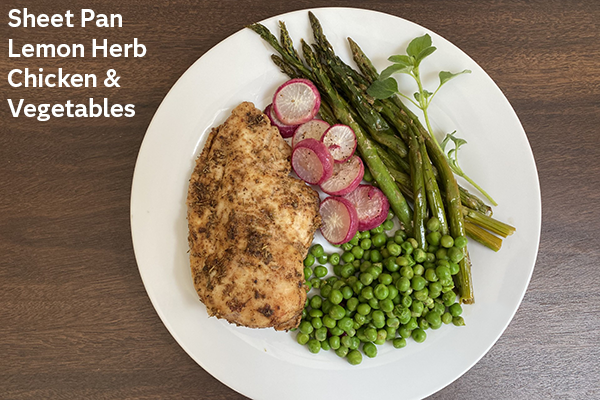
Ingredients
For the chicken
2 lbs chicken breasts or thighs
1–2 Tbsp olive oil
1 tsp garlic powder
1 tsp dried thyme or 1 Tbsp fresh
1 tsp dried oregano or 1 Tbsp fresh
¼ – ½ tsp ground cloves (*optional – see note)
zest of 1 lemon
1-2 Tbsp lemon juice
½ tsp salt
½ tsp black pepper
1 Tbsp honey (optional)
For the spring vegetables
1 bunch asparagus, trimmed
1 cup sliced radishes or carrots
2 cups peas (frozen)
1–2 Tbsp olive oil
salt and pepper to taste
Instructions
- Preheat oven to 425°F (220°C).
- In a bowl, mix olive oil, garlic powder, thyme, oregano, lemon zest, lemon juice, salt, pepper, (optional) ground cloves, and (optional) honey.
- Coat the chicken thoroughly in the marinade.
- Toss asparagus and radishes with olive oil, salt, and pepper.
- Spread asparagus and radishes on the sheet pan. Place chicken on top or nestled between them. Place in the preheated oven.
- Toss frozen peas with olive oil, salt, and pepper. Add them to the baking sheet after 22-25 minutes.
- Continue roasting until the chicken is cooked through (165°F/74°C) and the vegetables are tender, about 25–30 minutes from the original start time.
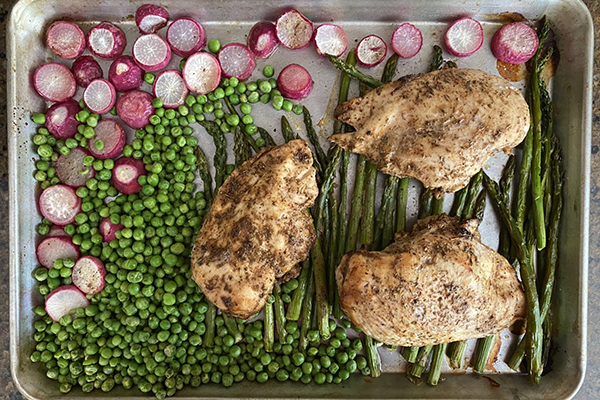
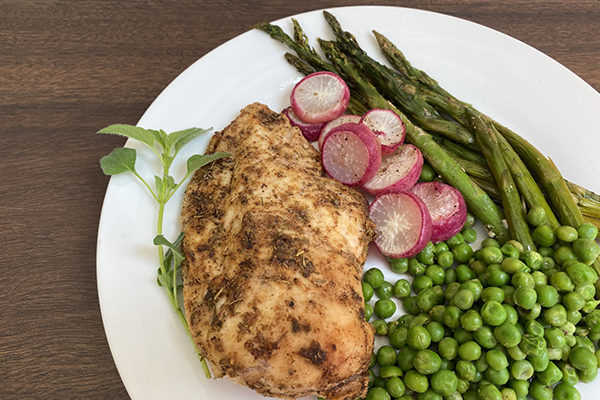
*Note: This recipe was originally created using AI assistance to develop a meal that used ground cloves in a less traditional way. While it’s an unusual pairing with the other ingredients, it provides an unexpected warmth to the dish. The original recipe called for 1 tsp, but I suggest decreasing to ¼ to ½ tsp unless preparing ahead to eat later. The clove flavor mellowed out after overnight refrigeration, and the leftovers that used 1 tsp ground cloves were quite tasty. I suggest including the honey if using ground cloves.