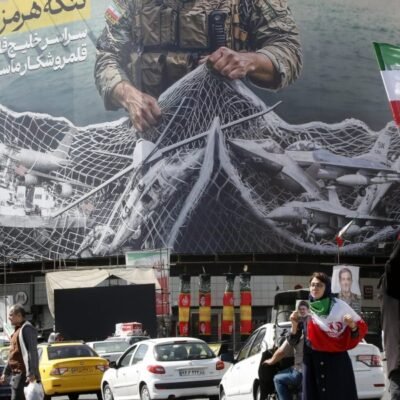



Iran’s parliamentary speaker, Mohammad Bagher Ghalibaf, said Wednesday that three clauses of the 10-point ceasefire framework with the United States had already been violated, despite negotiations not beginning.
Ghalibaf cited continued Israeli strikes in Lebanon; a drone shot down over Iran’s Fars province; and what Tehran called a denial of its right to uranium enrichment. “In such situation, a bilateral ceasefire or negotiations is unreasonable,” he wrote in a statement posted to X. The Strait of Hormuz remained largely blocked, with only four tanker transits recorded on the day, according to S&P Global Market Intelligence.
Markets barely flinched on the news, with crude ticking up slightly higher and stocks falling only 0.3%. Crude has posted one of its sharpest single-day drops on record, and global equities have ripped higher on peace-deal euphoria.
The statement throws immediate uncertainty over a deal that is barely 24 hours old and exposes a fundamental disagreement over what was actually agreed to. The U.S. and Iran are heading into talks in Islamabad, Pakistan, on Saturday working to Frankenstein some agreement between two different documents: Iran’s 10-point plan and the White House’s 15-point plan. White House press secretary Karoline Leavitt said Wednesday there was no way President Trump would accept Iran’s version, which demands Tehran retain control over the Strait of Hormuz and receive reparations for the war.
Trump moved Wednesday to dismiss the idea that any framework other than his own was on the table. In a post on Truth Social, he wrote: “Numerous Agreements, Lists, and Letters are being sent out by people that have absolutely nothing to do with the U.S.A./Iran Negotiation, in many cases, they are total Fraudsters, Charlatans, and WORSE.” It was unclear whether Trump was referring to Ghalibaf’s statement; to an earlier letter reported by CNN that the White House said carried no official authority; or to both.
Lebanon becomes the flash point
The single biggest point of contention, and now the most violent, is Lebanon.
Israel’s military said Wednesday it had struck more than 100 Hezbollah command centers and military sites in 10 minutes, in what it called the largest wave of strikes in the conflict. The southern suburbs of Beirut, southern Lebanon, and the eastern Bekaa Valley were all targeted. Lebanon’s health ministry said at least 112 people were killed and 837 injured while the country’s civil defense put the toll higher, at 254 dead and more than 1,100 wounded. Hospitals are overwhelmed in Beirut, while rescue crews reported people trapped under the rubble of collapsed buildings.
The strikes came hours after Israeli Prime Minister Benjamin Netanyahu’s office publicly denied Pakistan’s assertion—which Islamabad had used as a basis for mediating the U.S.-Iran ceasefire—that the deal also covered the Lebanese front.
Iran had drawn its line directly on this question. Foreign Minister Abbas Araghchi said Wednesday the ceasefire with the U.S. must include a pause in Israel’s conflict with Hezbollah. “The Iran-U.S. Ceasefire terms are clear and explicit: the U.S. must choose—ceasefire or continued war via Israel. It cannot have both,” Araghchi wrote on X. “The world sees the massacres in Lebanon. The ball is in the U.S. court.”
The White House sees it differently. “Lebanon is not part of the ceasefire. That has been relayed to all parties in the ceasefire,” Leavitt told reporters.
Hezbollah, which has not claimed any attack since the ceasefire was announced, said Wednesday that the group was on the “threshold of a major historic victory” and warned displaced families to wait for a formal ceasefire announcement before trying to return home. Israeli military spokesman Effie Defrin said Israel would respect the ceasefire with Iran but warned: “If we need to go back and attack Iran, we will.”