


Nourishing yourself during pregnancy is one of the most powerful ways you can support your growing baby – and your own well-being. While pregnancy comes with many changes, nutrition doesn’t have to feel overwhelming. With thoughtful, realistic choices, you can support healthy development, steady energy, and recovery through every stage – from preconception to postpartum.
#Pregnancy nutrition made simpler. Realistic ways to eat well during pregnancy and support mom and baby every step of the way. #saslife Share on X
Preconception health plays a meaningful role in fertility, early fetal development, and pregnancy outcomes. Ideally, healthy routines begin 6-12 months before conception – but life doesn’t always follow a timeline. The good news? It’s never too late to start. Focus on:
- Eating a variety of nutrient-dense foods
- Staying active in ways that feel good
- Managing stress and prioritizing sleep
- Taking a high-quality prenatal vitamin
If you’re not doing all of these consistently, that’s okay. Start with one or two changes and build from there.

What you eat during pregnancy matters just as much, if not more than, how much. Pregnancy increases the need for many nutrients. A balanced diet with a variety of minimally processed foods should cover the basics, but supplements can help fill gaps when needed.
Calories
Growing a baby takes energy, but calorie needs don’t double (like the saying “eating for two” implies). Most pregnant women need about 300 additional calories per day, added gradually throughout pregnancy.
Protein
Supports growth and repair of tissues for both mom and baby. A general goal is at least 100 grams of protein per day. This may sound like a lot, but it is very doable if you break it up throughout the day by aiming for 25-40 grams of protein per meal (roughly 3x/day). If you need a snack, aim for 10-20 grams of protein.
Carbohydrates
Provides the energy protein needs to do its job. Choose nutrient-dense carbohydrates like whole grains, fruits, starchy vegetables, beans, and lentils to support steady energy and healthy fetal development.
Healthy Fats (especially Omega-3s)
Supports vitamin absorption and baby’s brain development. Omega-3s – particularly DHA – are especially important during pregnancy. Fatty fish, walnuts, flaxseed, and/or a quality omega-3 supplement can help meet needs. In addition to these omega-3 rich foods, choose minimally processed whole food fats like avocado, nuts, seeds, and olives.
Folate
Critical for early brain and spinal cord development. Methylated folate is often better absorbed than folic acid.
Dietary sources include: leafy green vegetables, citrus fruits, avocado, beans, and lentils. Many enriched grain products, such as bread, flour, pasta, and cereal, are fortified with folic acid, a synthetic form of folate.
Iron
Needed to support increased blood volume. Pair plant-based iron with vitamin C to improve absorption.
Dietary sources include: meat, seafood, poultry, tofu, beans, lentils, dark green vegetables, and pumpkin seeds.
Calcium
Essential for building strong bones and teeth.
Dietary sources include: milk, cheese, yogurt, fortified non-dairy milk, sardines with bones, spinach, collard greens, bok choy, and tofu.
Choline
Supports brain and nervous system development.
Dietary sources include: meat, fish, poultry, dairy products, eggs, broccoli, Brussels sprouts, nuts, and seeds.
Vitamin A
Important for growth and vision. Avoid high-dose vitamin A supplementation.
Dietary sources include: leafy green vegetables, orange and yellow fruits and vegetables, tomatoes, eggs, fish, and dairy.
Supplements are not well regulated, and there is no standard definition for what can be labeled a “prenatal” or what nutrients it contains, so choose wisely.
A solid supplement foundation for most women includes a:
- High-quality prenatal vitamin
- Trusted omega-3 supplement
Some women may also need additional vitamin D or iron based on labs, diet, and individual risk factors. Always check with a healthcare provider or registered dietitian before adding supplements.
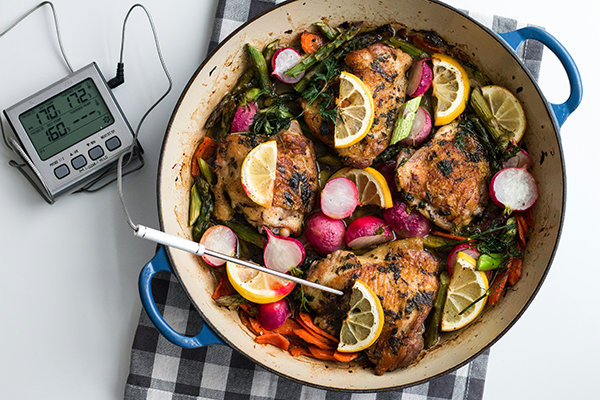
Pregnancy makes both mom and baby more vulnerable to foodborne illness, so food safety is especially important.
- Avoid alcohol, tobacco, THC, and CBD
- Limit caffeine to no more than 200 mg per day
- Be cautious with certain herbal teas and artificial sweeteners
- Avoid high-mercury fish and raw or undercooked seafood
- Skip unpasteurized dairy, deli meats (unless heated to steaming), and refrigerated smoked seafood
- Wash produce thoroughly and cook foods to safe temperatures
The weeks after delivery are a time of healing and adjustment. Eating well supports recovery, energy, and emotional health. Focus on:
- Eating balanced meals with protein, fiber, and healthy fats
- Drinking 8–12 cups of water per day
- Continuing prenatal vitamins for at least 3 months postpartum
- Accepting help when it’s offered
If you’re breastfeeding, making milk is hard work! Which means your body is going to need additional fuel to keep up. Eating enough (300-500 additional calories per day), staying hydrated (10+ cups of water per day), and caring for yourself all play important roles in supporting milk supply and your overall well-being.
For more fourth trimester guidance, check out these blogs:
There is no perfect way to eat before, during or after pregnancy. Just do your best. Eat what you can, when you can; move in ways that feel good; and rest whenever possible. Trust your body, give yourself grace, and focus on progress – not perfection.
Refer back to this handout for simple prenatal nutrition reminders.
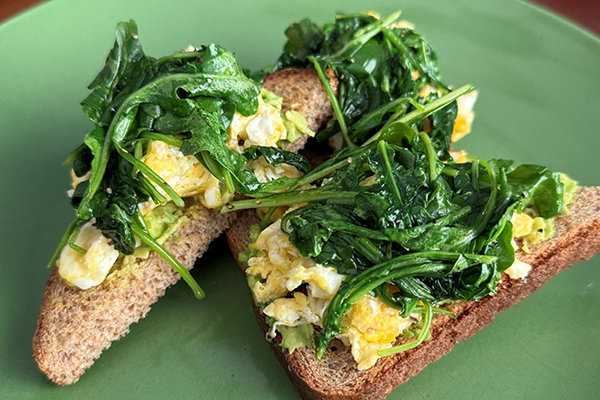
Avocado Toast with Eggs + Sautéed Greens
Makes 1 serving
PRINT RECIPE
Healthy fats, choline, and iron support baby’s brain development while helping mom maintain steady energy. It works well for breakfast, lunch or a light dinner – and comes together quickly on busy days.
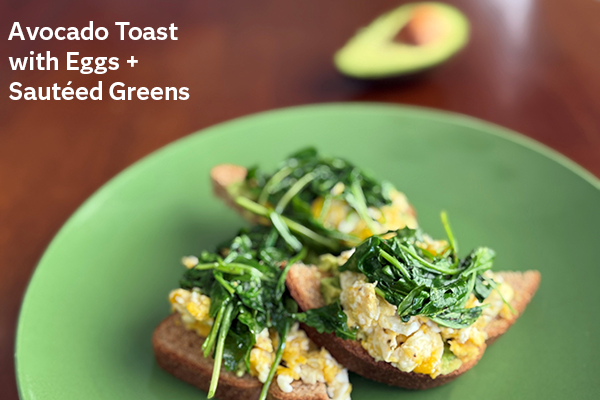
Ingredients
- ½ ripe avocado
- 1-2 slices whole grain or sourdough bread
- 2 eggs
- 2 cups fresh arugula, spinach, kale or mixed greens
- 2 tsp olive oil
- Salt and pepper, to taste
- Optional garnishes: lemon juice, red pepper flakes and/or feta cheese
Instructions:
- Toast bread to your liking.
- Heat olive oil in a skillet over medium heat. Add greens and sauté until just wilted, about 2-3 minutes. Season with salt and pepper. Set aside.
- In the same skillet, cook eggs to preference (fried, scrambled, or poached).
- Mash avocado onto toast. Season with salt and pepper.
- Top avocado toast with eggs and cooked greens. Finish with optional garnishes if desired.