

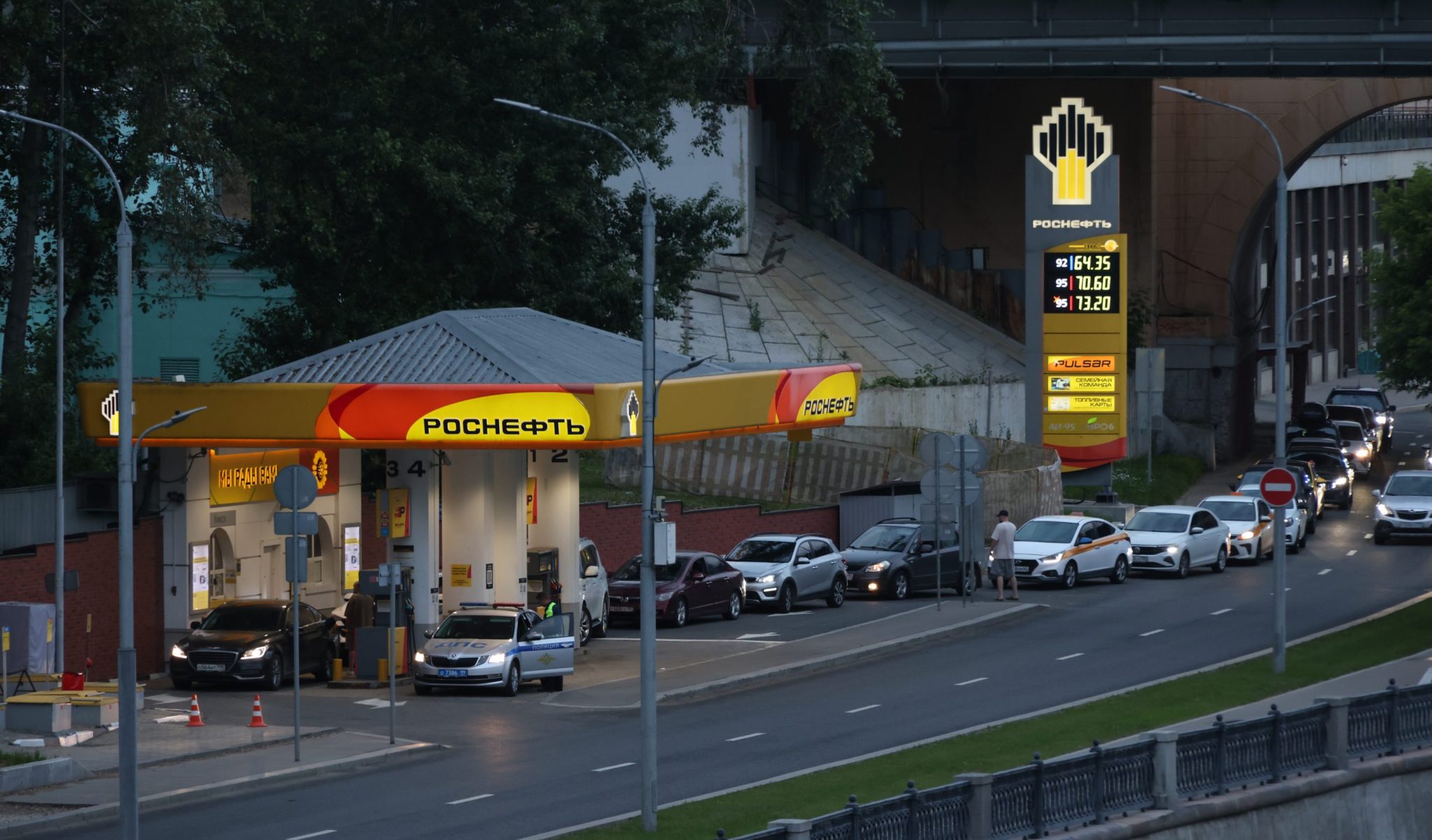
The fuel shortage ravaging Russia has forced motorists around the country to wait in endless lines to fill up, evoking memories of communist-era privation.
Ukraine’s months-long campaign of drone strikes on oil infrastructure deep inside Russian territory has forced oil refineries to shut down. Energy analysts have estimated that 25% or more of Russia’s refining capacity has been taken offline by the attacks.
The head of Russia’s biggest oil company even called the damage to refineries “unprecedented,” according to a letter to President Vladimir Putin that was leaked to Russian newspaper Kommersant.
The long-range drones and widespread shortages mean Russian civilians far from the frontlines are suffering the effects of Putin’s war on Ukraine.
In the Siberian city of Irkutsk—about 3,000 miles from Ukraine—gas station lines are so long that local officials have vowed to provide portable toilets for Russians waiting along the road.
One such motorist, Alyona Sadovnikova, told the New York Times that she, her husband and their 18-month-old baby got in line at 11 p.m. one recent Friday and waited until 5 p.m. the next day until they were finally able to get gas.
During the 18-hour ordeal, she used the bathroom at the gas station, where she also bought snacks, while others in the line shared food and toys with her baby.
She first noticed Russia’s fuel shortage in mid-June after she tried filling up at a gas station but couldn’t because it was only serving people with ration coupons.
“I was horrified: Are we in the Soviet Union now where you had to get coupons to buy sausage?” Sadovnikova, a 26-year-old who works in social media, told the Times.
The fuel crisis is adding further strain to Russia’s economy, which has been hit by high inflation and steep interest rates to rein in prices. The onerous borrowing costs and weakening consumer demand have spurred more defaults, raising fears that a banking crisis may be imminent.
On Saturday, Ukraine continued its drone strikes, this time at an oil terminal in St. Petersburg, which was previously targeted in June during Putin’s signature economic conference.
Putin has acknowledged the fuel crunch but shrugged off Ukrainian attacks on oil facilities as “not critical.” Still, the Kremlin has banned exports of gasoline and jet fuel to provide more supply for domestic consumption and has even imported gas from India—despite being one of the world’s biggest oil producers.
Deputy Prime Minister Alexander Novak also downplayed the situation, saying the fuel market was “not easy, but controllable.” And Finance Minister Anton Siluanov even denied the crisis created a spike in gasoline prices.
But prices are in fact rising, fights are breaking out among frustrated drivers waiting in line, and some gas stations are closing. In Krasnodar, Russia’s third-largest region, a local official said at least one-third of the gas stations have been shut down.
In Crimea, the Ukrainian peninsula Russia illegally annexed in 2014, the fuel shortage forced authorities to declare that fuel is now mostly reserved for municipal and emergency services with sales to the public halted, unless there are extra supplies left over.
On top of that, Crimea is suffering from power outages and a lack of water. Historically a summer vacation destination for Russians, people are now fleeing Crimea as panic has set in.
Even the Russian-backed leader of Crimea warned on social media that “large volumes of fuel won’t be for sale in the immediate future.”