

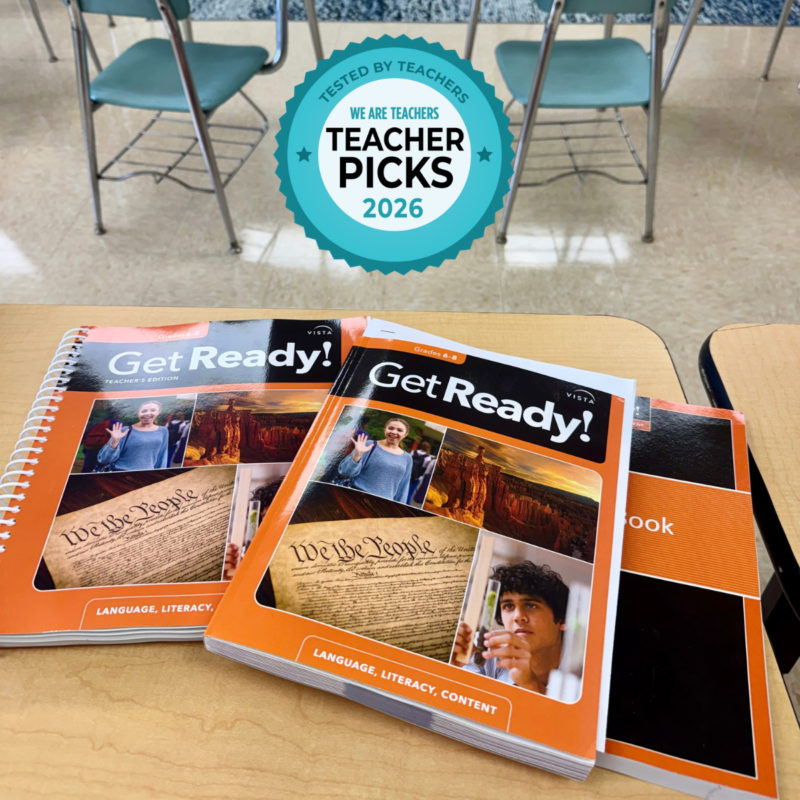
Finding age-appropriate resources for newcomer multilingual learners can be a challenge, especially when students need support in everything from foundational English to the academic language they’ll encounter across their classes. That’s why veteran ESL educator Katie Leslie was excited to try Get Ready!, a complete program from Vista for newcomer and beginner multilingual learners.
Katie has spent 24 years teaching, most of them dedicated to multilingual learners, and has also spent 14 years teaching graduate-level ESL certification courses. After using Get Ready! with her newcomer students, she was impressed by how the program combines speaking, listening, reading, writing, phonics, grammar, vocabulary, and content-area language within a single program.
Here’s what Katie had to say about Get Ready!
For which grade levels and students do you think Get Ready! is best suited?
Get Ready! is especially well suited for middle and high school multilingual learners who are newcomers or at the beginning stages of English language development. I would use it with WIDA levels 1 and 2.
One of the things I appreciate most is that the materials provide the foundational English support beginning students need without feeling too young or “babyish.” I see it working well as a comprehensive newcomer resource while also supporting students as they begin accessing their content-area classes.
How did you use Get Ready! in your classroom?
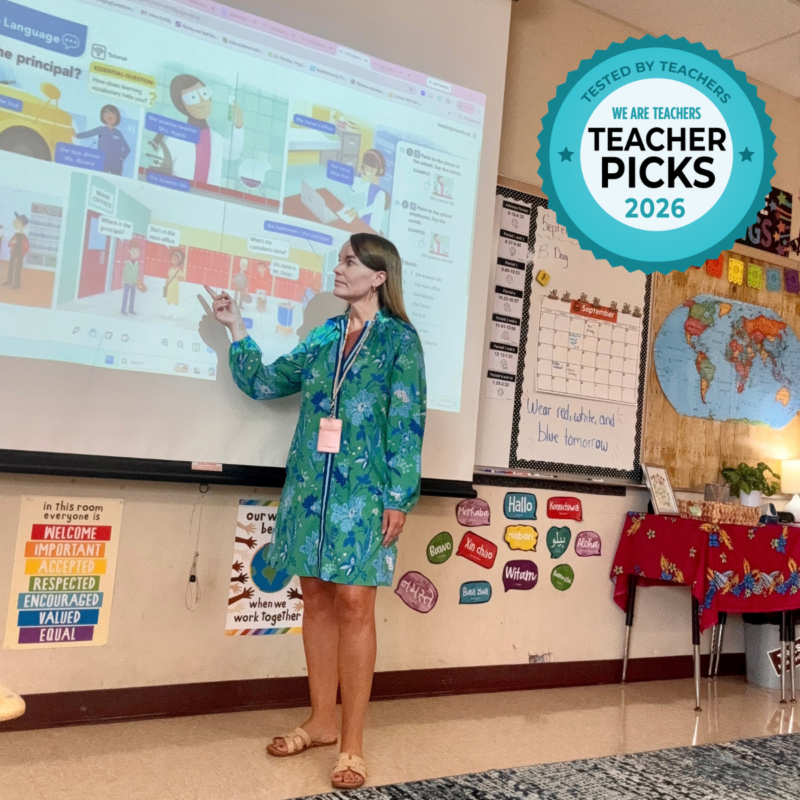
I began my newcomer class with the introductions section of Get Ready! Unit 1. We learned several ways to say hello and goodbye, basic school vocabulary, and pronouns. Students used the interactive pages to listen to and repeat common phrases. They also used the program’s sentence frames to introduce themselves and have conversations with partners.
We practiced through an inside-outside circle activity so students could speak with as many classmates as possible. Students also interacted with classmates learning how to say and spell their names, which mimics the introduction video they watched.
Throughout the lesson, I incorporated the program’s print materials, workbook activities, speaking opportunities, videos, and digital resources rather than using each component in isolation.
My next step will be incorporating the phonics components provided in the program. I administered a phonics screener to all my students, and the results showed that they need significant support distinguishing vowel sounds. Short ‘a’ and short ‘i’ are introduced in this unit, making it an ideal starting point for targeted phonics instruction.
How did your students react to the program?
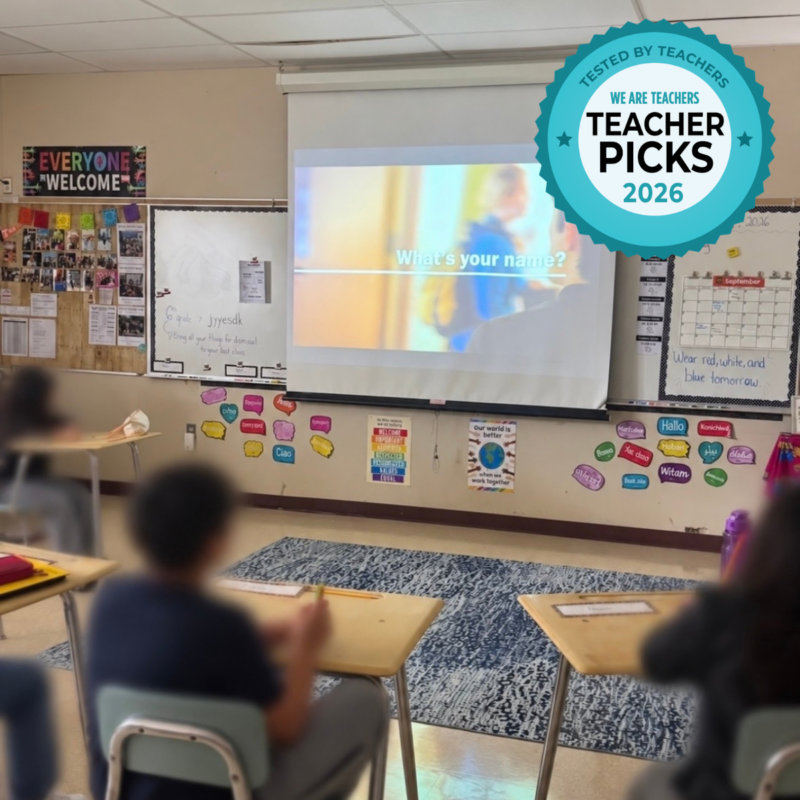
My students really loved the “Connect to Language: What’s Your Name?” video.
All of the students smiled or giggled when the teacher took Jorge’s ball and began dribbling it. The first few days of school can be especially challenging for newcomers. All of these students have been in the country for a short time, and one student had just started school that week. I think the video helped lighten the mood and made the classroom feel more welcoming.
I also loved that the video felt current, relatable, and, in the words of many middle school students, “not cringey!” My students could truly see themselves in it.
It was a bit of a turning point in the first week where I could see students start to relax more. Afterwards, they completed the activity where they learned how to spell the first and last names of their classmates. I loved watching them walk around, use English, and interact in a stress-free and authentic way.
What makes Get Ready! special or unique compared to other multilingual learner programs you’ve used?
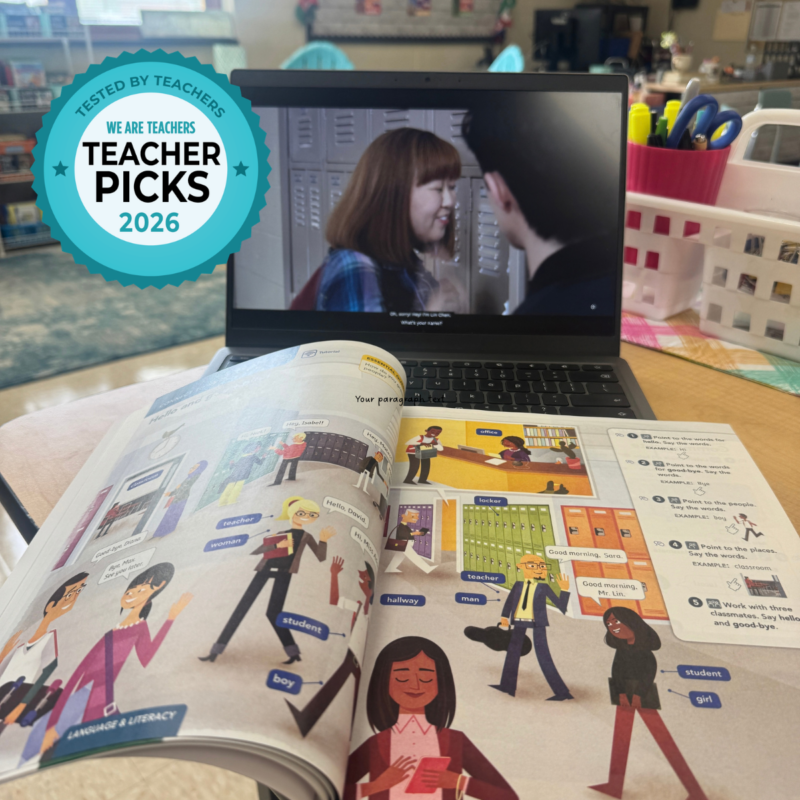
Get Ready! goes beyond what I typically expect from a newcomer program.
Many newcomer resources do a good job of introducing foundational vocabulary and everyday communication. Get Ready! does that while also embedding phonics, grammar, speaking, listening, reading, and writing and beginning to develop the academic language students need across content areas.
The sections devoted to the Language of Math were really impressive as well. Many people assume that math is a universal language. However, there are so many complex academic terms in math that newcomers must learn in order to solve equations and word problems and just to engage with math tasks. I was excited to see the depth of math-related items in this text.
How easy was Get Ready! to use in your classroom?
I found the program very user-friendly. The print and digital resources work together seamlessly, and I was able to incorporate the materials into my instruction without having to completely redesign my lessons around the program.
I also appreciated the variety of ways students could interact with the content, including print, audio, video, speaking, and writing activities.
So far, I’ve focused primarily on using the digital resources for whole-group instruction rather than assigning individual digital tasks. However, I believe it would be extremely beneficial for both teachers and students. I especially like the interactive options available on each digital page and the activities that directly connect to the content of each unit.
How will Get Ready! save you time or make teaching easier?
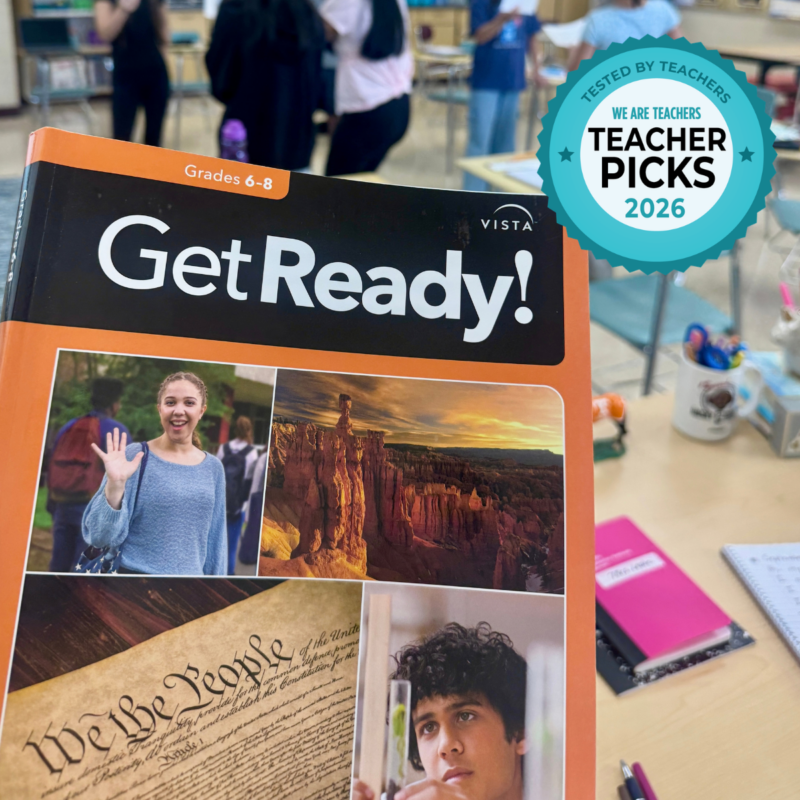
As an ESL teacher, I often find myself searching across multiple websites and resources to piece together materials that address all of my newcomers’ needs.
I may find a great speaking activity in one place, phonics practice somewhere else, and then need another resource for academic vocabulary or listening practice. Having these components within one comprehensive program can significantly reduce that planning time.
I can spend less time searching for resources and more time deciding how to differentiate and deliver instruction for the students in front of me.
How would you sum up your overall experience with Get Ready?
My overall experience was very positive. After working with multilingual learners for more than 20 years, I have used and often pieced together many different resources to meet the needs of newcomers. What impressed me most about Get Ready! was how comprehensive and cohesive it felt. It brings together foundational English, speaking and listening, literacy, phonics, grammar, academic vocabulary, and content-area language while remaining age-appropriate for older learners.
I honestly love how much time it would save me searching for materials.
Check out Katie’s video review of Get Ready!
Learn more about Get Ready! and how it can support your multilingual learners.
Teacher Picks is a sponsored program available from We Are Teachers. All opinions shared in the review are honest and based on the teacher’s direct experience. To learn more about our guidelines and review process, click here.