

For the past 13 years, NC State College of Design students have been tasked with exploring how technology and design can help tackle society’s biggest challenges.
This year, students were asked to reconsider the role design plays in society. Rather than developing a traditional B2B interface, they explored how design, combined with agentic AI, could respond to large-scale, structural challenges facing communities and industries today.
Students presented their specific societal challenge at SAS world headquarters, researching the broader system, identifying key stakeholders and exploring how AI-powered design strategies could meaningfully respond to real-world needs. The result was four system prototypes reflecting bold thinking, thoughtful research and a strong grounding in SAS’ core values. The four project groups focused on:
Kicking off the event, SAS User Experience Design Manager Rodney Pruitt welcomed attendees to a different kind of Design Day. He framed this year’s project as an opportunity to explore how designers can engage with agentic AI at a systems level, grappling with both practical and ethical considerations while rethinking how design can respond to complex societal issues.
“The students had the opportunity to wrestle with the same challenges we face as designers and developers at SAS,” Pruitt said. “How to utilize agentic AI as a collaborative tool in our work, integrating agents within larger systems, and perhaps the hardest question: what are the practical and ethical questions along the way?”
NC State Graphic and Experience Design professor Jarrett Fuller, now in his fifth year leading the project, expanded on the thinking and structure behind this year’s assignment. He emphasized that the challenge reflected a broader shift in the design profession, one driven by AI’s rapid influence on both society and the role of designers. While past projects focused primarily on interfaces, this year’s students were asked to consider the entire process, from system strategy to human interaction.
“This is an interesting time to be alive. There’s a lot going on in the world, and questions around artificial intelligence are making us rethink what designers even do,” Fuller said. “What quickly became apparent is that a lot of our assumptions about design and AI, and government and society, were challenged. So, we had to think about this project in a different way.”
This is an interesting time to be alive. There’s a lot going on in the world, and questions around artificial intelligence are making us rethink what designers even do. Jarrett Fuller
Over just 10 weeks, students conducted research, built knowledge bases and experimented with solutions ranging from fictive and utopian to pragmatic. With support from SAS mentors, who developed starter AI agents to help teams get oriented, students began working in GitHub, often with little prior coding experience, before gaining confidence and building their own agents. Teams mapped complex systems, explored how agents communicate and identified critical human touchpoints, resulting in a wide range of imaginative and thoughtful outputs across the projects.
-
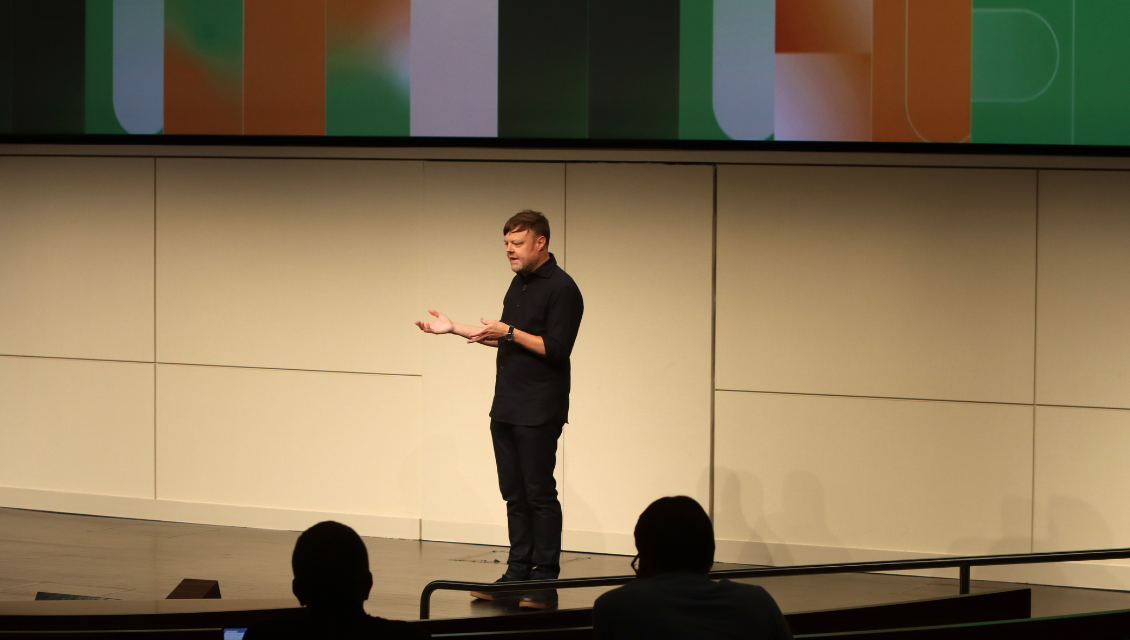
- SAS User Experience Design Manager Rodney Pruitt
-
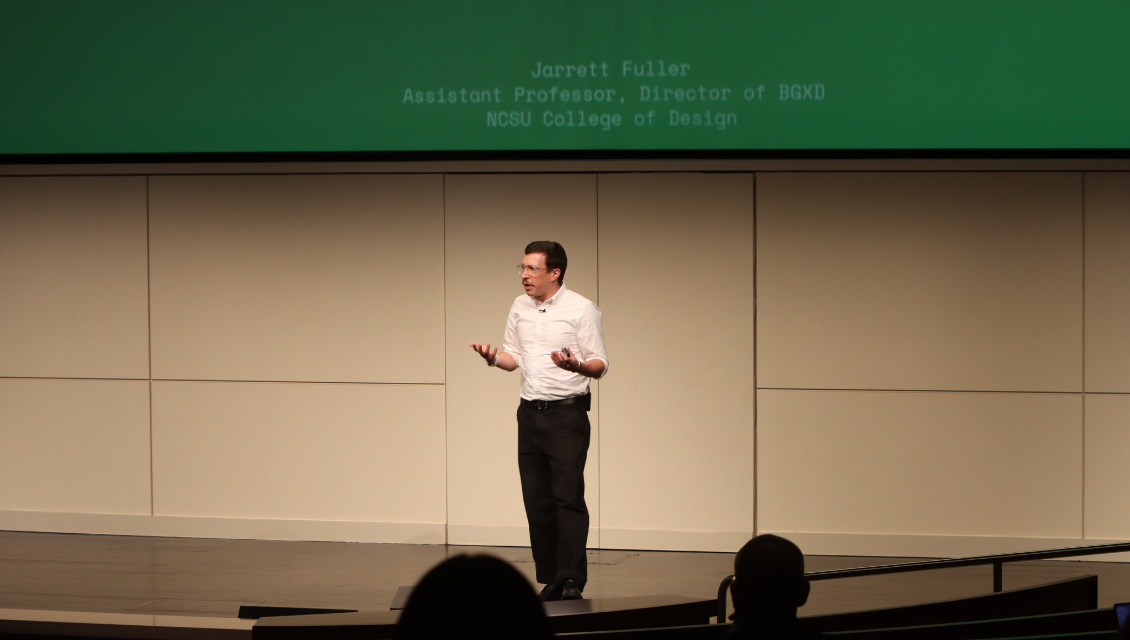
- NC State Graphic and Experience Design Professor Jarrett Fuller
Student presentations
News and Media group
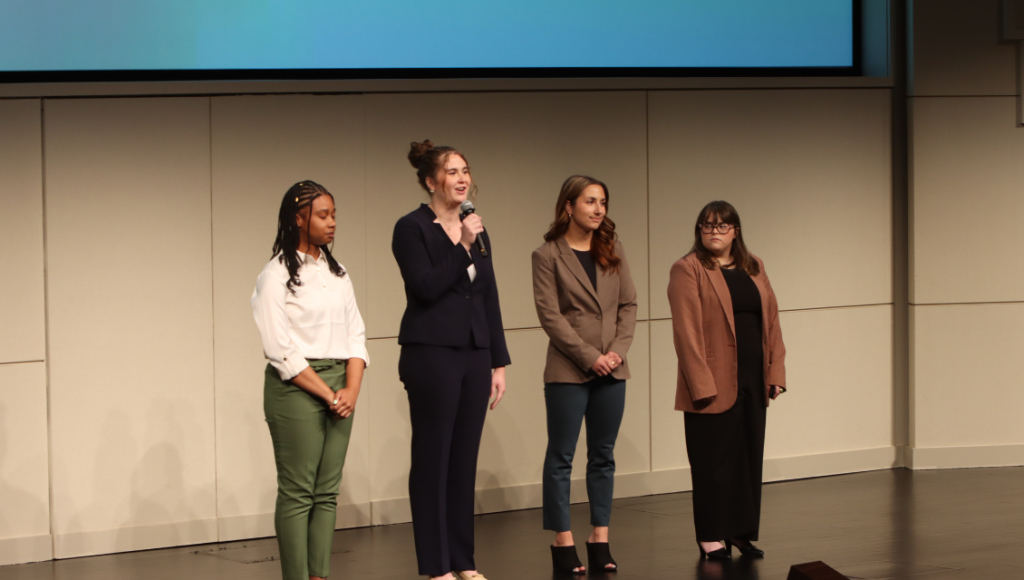
Team members: Casey Blackert, Lizzie Edwards, Amber McCullough, Autumn Tate
Societal issue: The reliance on social media for news consumption has led to decreased access of trustworthy and credible information, weakening local news outlets and creating the conditions for news deserts.
Student pitch: A new system that integrates community input with agentic AI fact checking, design formatting and human moderators to create a credible and accessible platform for news distribution.
Scenario: The fictional city of Larkhaven demonstrates how the news distribution system supports news-desert communities through citizen reporting, agentic processing and news publication.
Opportunities:
- Citizen-driven journalism to create reporting opportunities.
- Credibility and transparency to build trust.
- Equal and fair access to news for all citizens.
Agents:
- Oversight agent
- Bias and fact-checking agent
- Visual and language expert agent
Impact: The automated system provides opportunities for and access to community-sourced local news, alleviating the financial burden of hiring new journalists for Larkhaven. The system also empowers citizens by giving them the opportunity to be involved and proactive in their community, ultimately building trust in the local news, and everyone gets a chance to be involved.
Transportation group
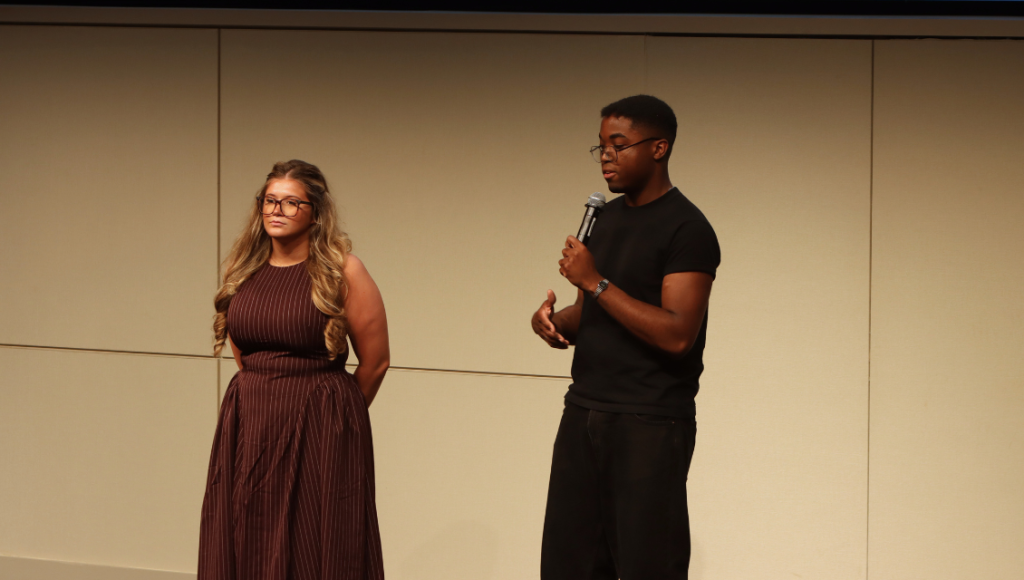
Team members: Sean Evans, Ashley Martin, Krista Padilla
Societal issue: Public transit should be an equalizer connecting residents to their city and promoting civic, economic and social engagements, but transit issues often entrench inequities to the detriment of the city and all its communities.
Student pitch: A seamless design of intellectual agents that help New York City make more equitable transit decisions through enhancing their bus system by analyzing patterns, predicting needs, and guiding how resources are distributed across communities.
Scenario: NYC, 5:30 p.m.; Transit-dependent riders are heading home after a large event at Madison Square Garden.
Opportunities:
- Transportation to outer boroughs in New York City is not prioritized.
- The bus system cannot adapt to changing traffic conditions.
- Resources are not always diverted where they are most needed.
Agents:
- Environmental conditions agent
- Time and place agent
- Rider data agent
- Feedback agent
- Route manager agent
- Data management agent
- Equity agent
Impact: Civic, economic and social engagement throughout the city increases as residents gain mobility. Additionally, residents gain greater agency in managing their transportation through agentic AI.
Disaster Response group
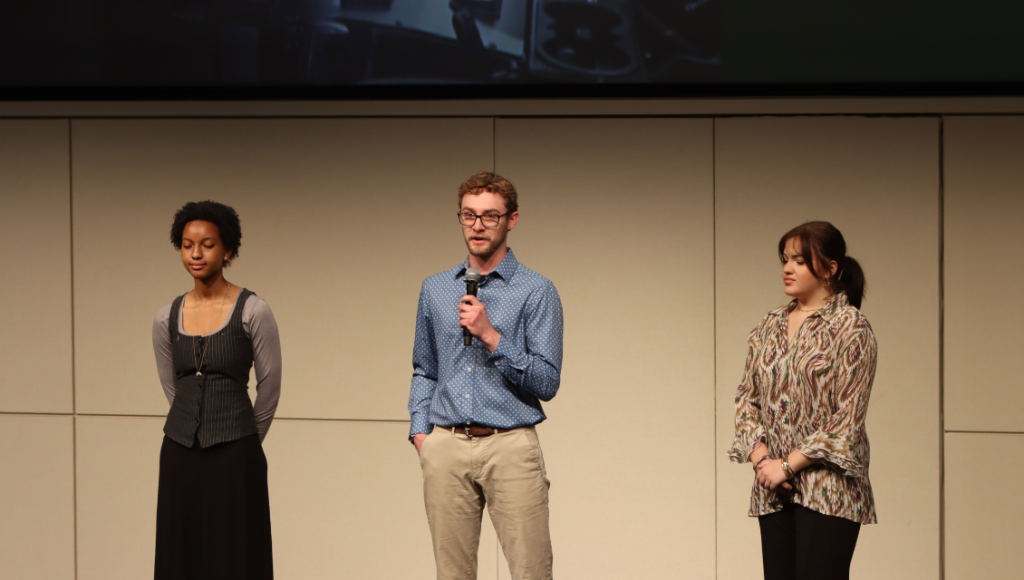
Team members: Gabrielle Campbell, Ethan Pawlak, Danielle Steele
Societal issue: Disaster relief systems are inefficient. Resource allocation moves through multiple authorities, causing delays. Frontline teams and citizens lack real-time awareness, which leaves communities uninformed and facilities underprepared.
Student pitch: A coordinated system of AI agents designed to transform disaster response by streamlining communication, accelerating resource allocation and improving real-time awareness for both responders and communities.
Scenario: A natural disaster has struck. Infrastructure is destroyed, safety hazards are everywhere, and people are injured. First responders arrive on scene and everyone desperately needs reinforcement.
Opportunities:
- Streamline communication and reporting across responder levels.
- Increase the efficiency of resource allocation for responders and facilities.
- Extend real-time updates to citizens to increase transparency of information.
Agents:
- Equity agent
- Data collection agent
- Resource allocation and logistics agent
Impact: This system enables greater communication in cross-functional search-and-rescue settings. It also provides peace of mind to citizens facing natural disasters.
Public Health group
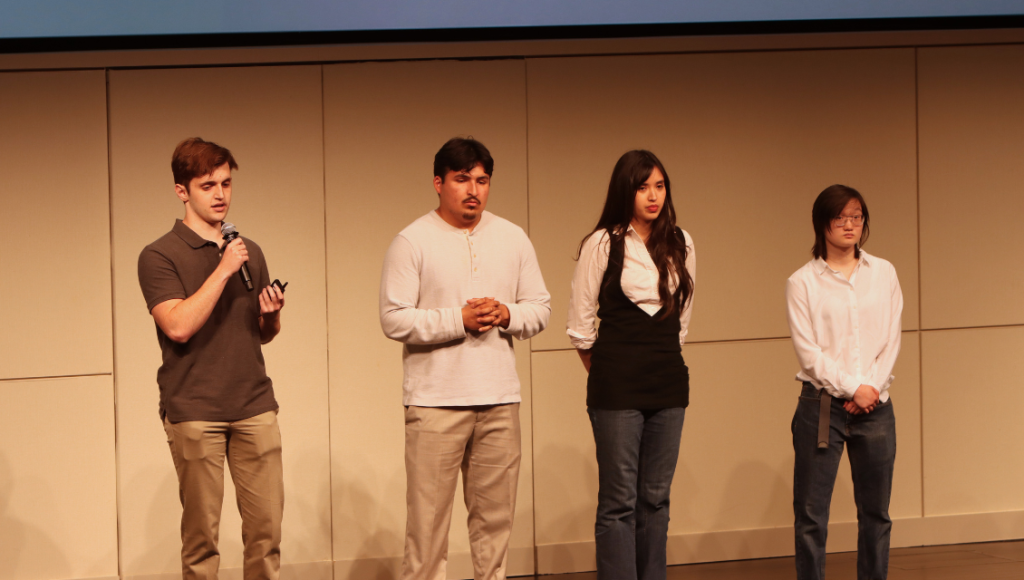
Team members: Joseph Angelo, Melissa Ciro, Chloe Loflin, Javier Martinez
Societal issue: 47.9 million Americans face food insecurity. Cities have the food and support, but a fragmented system makes access reactive instead of proactive.
Student pitch: A proactive system designed to shift food access from crisis response to prevention by connecting recipients, local organizations and suppliers through a coordinated network of intelligent agents.
Scenario: A recipient quickly finds food resources before receiving ongoing, personalized support. Meanwhile, local organizations coordinate resources to anticipate community needs.
Opportunities:
- SNAP policies and food access are unclear.
- Seasonal and geographic gaps limit access.
- Organizations are often understaffed.
Agents:
- Oversight agent
- Information access agent
- Supply chain management agent
- Data analysis agent
- Interaction agent
- Outreach agent
Impact: This system creates a network between recipients, organizations and resources. It also enables communities to anticipate need, reduce waste and streamline processes.