


Life somehow has a funny way of always making us busy, and fitting a workout into an already packed schedule seems like an impossible task. However, it doesn’t have to be! Many people believe they need to spend an hour or more in the gym to see meaningful health benefits, and while longer workouts certainly have their place, the truth is that even 10 to 20 minutes of intentional exercise can have a powerful impact on your health and well-being.
Benefits of a short workout
Reduces stress, improves mood, and benefits brain function
Just ten minutes of movement has been seen to reduce cortisol and release of feel-good chemicals in the brain. Short higher intensity exercise also releases BDNF. This is a key molecule that is responsible for brain health and cognitive function. This molecule is especially important as we age to reduce the risk of Alzheimer’s and Dementia.
Helps your heart
Short workouts can also provide meaningful cardiovascular benefits. Activities like brisk walking, cycling, jogging, rowing, or circuit training raise your heart rate and challenge your cardiovascular system. Over time, these workouts can help improve heart health, lower blood pressure, and increase endurance even after just 20min a day!
Benefits bone density and reduces risk of chronic disease
Consistent daily movement can add up to significant long-term improvements in overall health. Regular exercise helps maintain muscle mass, strengthen bones, support metabolic health, improve balance and mobility, and reduce the risk of many chronic diseases. The key is consistency, not perfection.
How to train with limited time
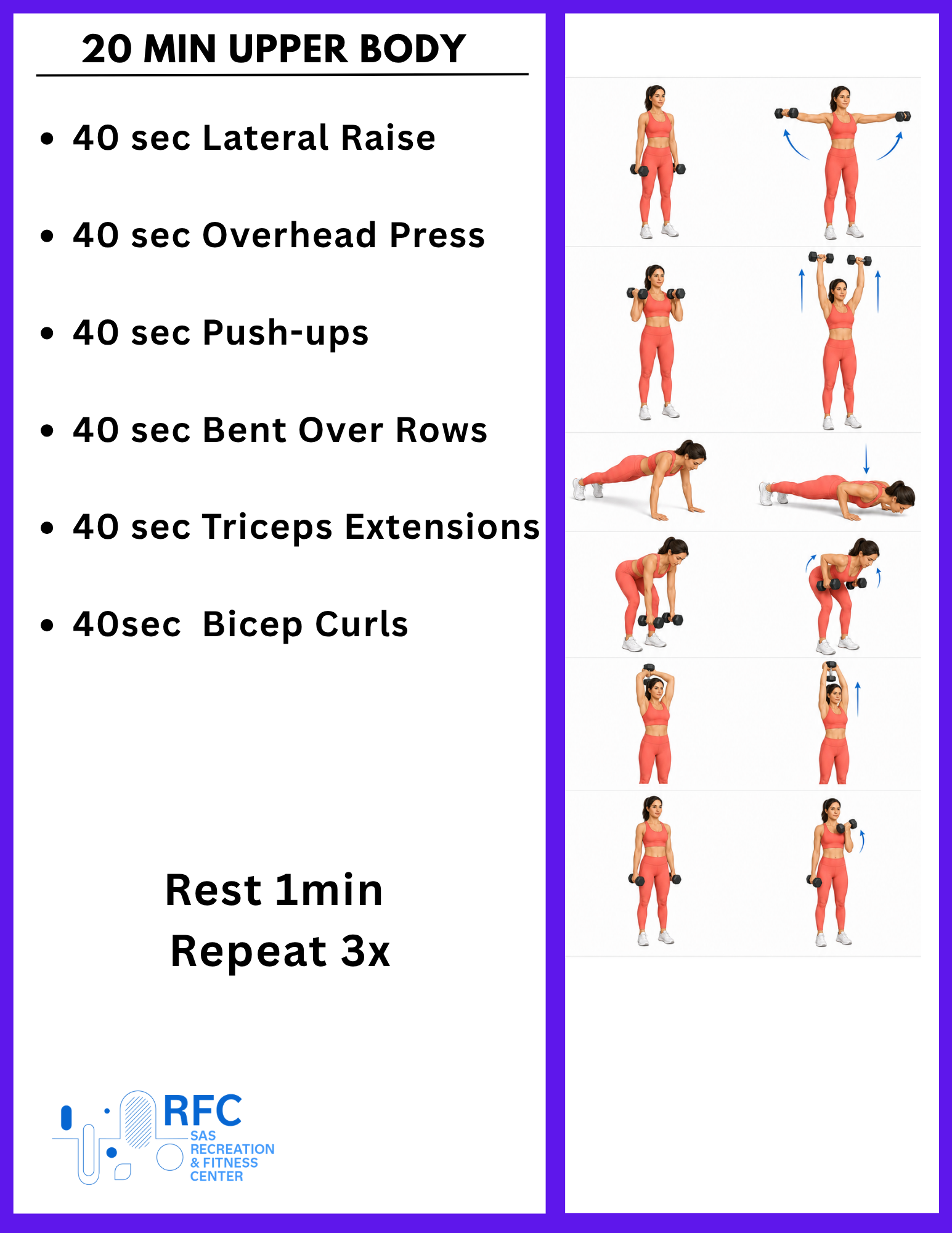
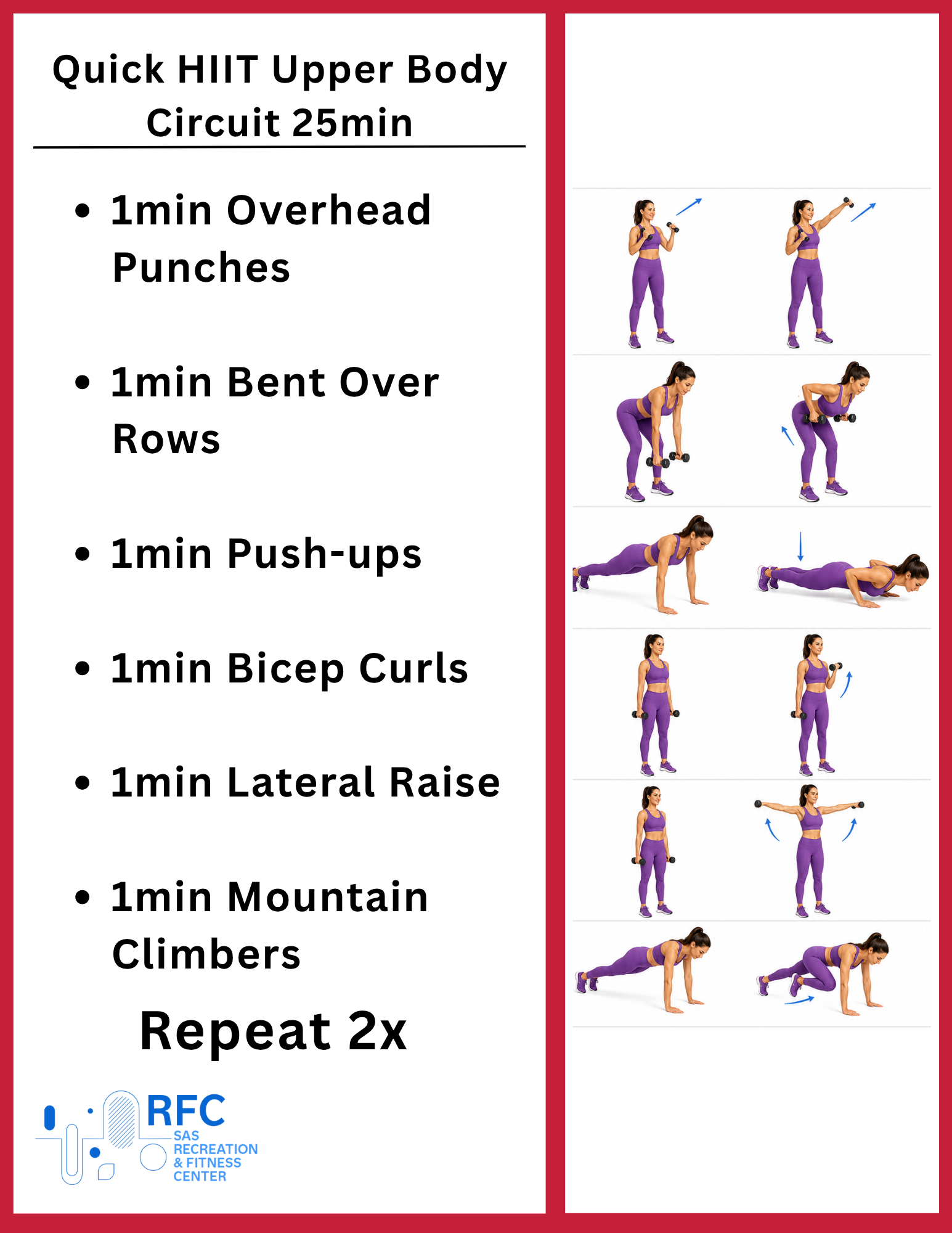
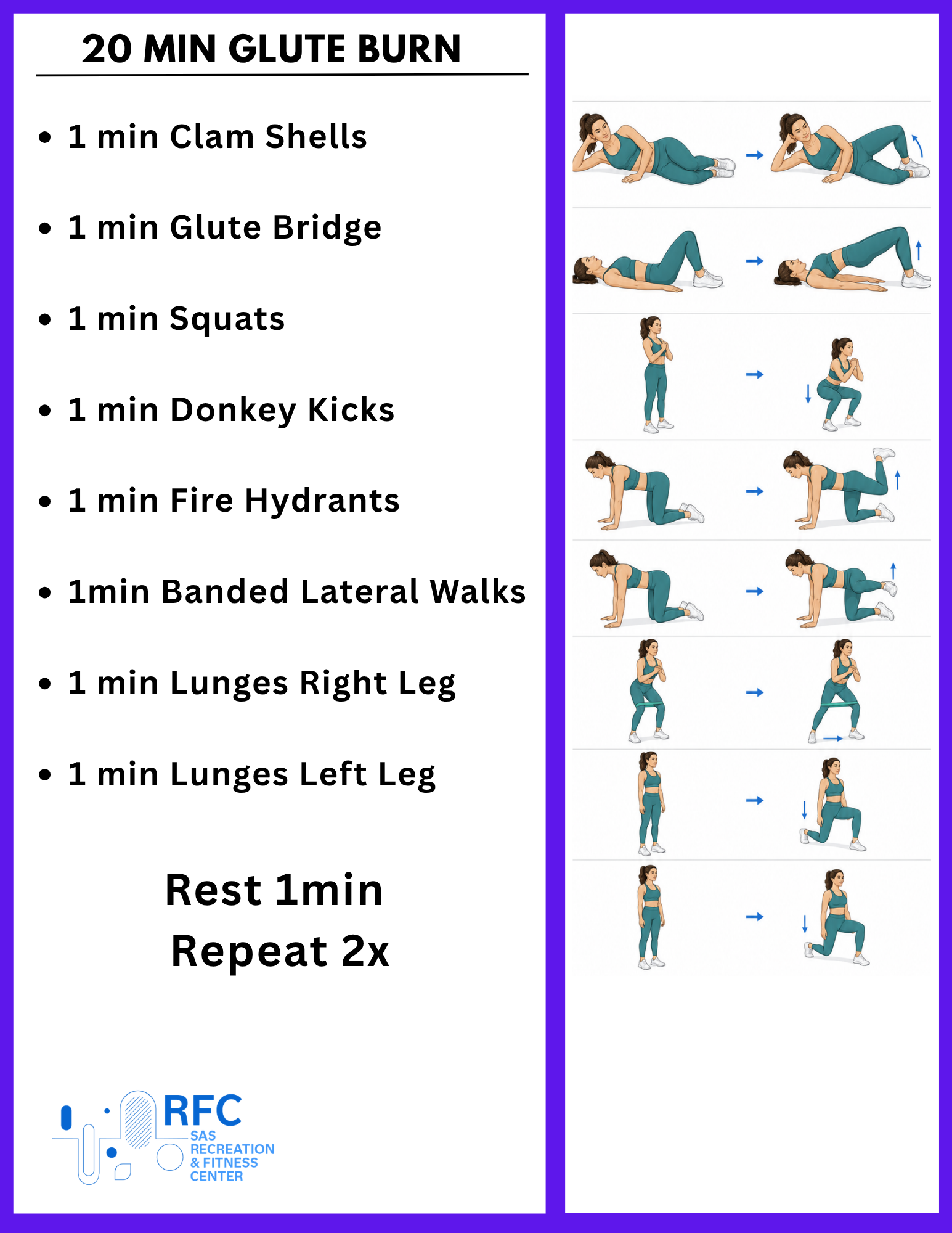
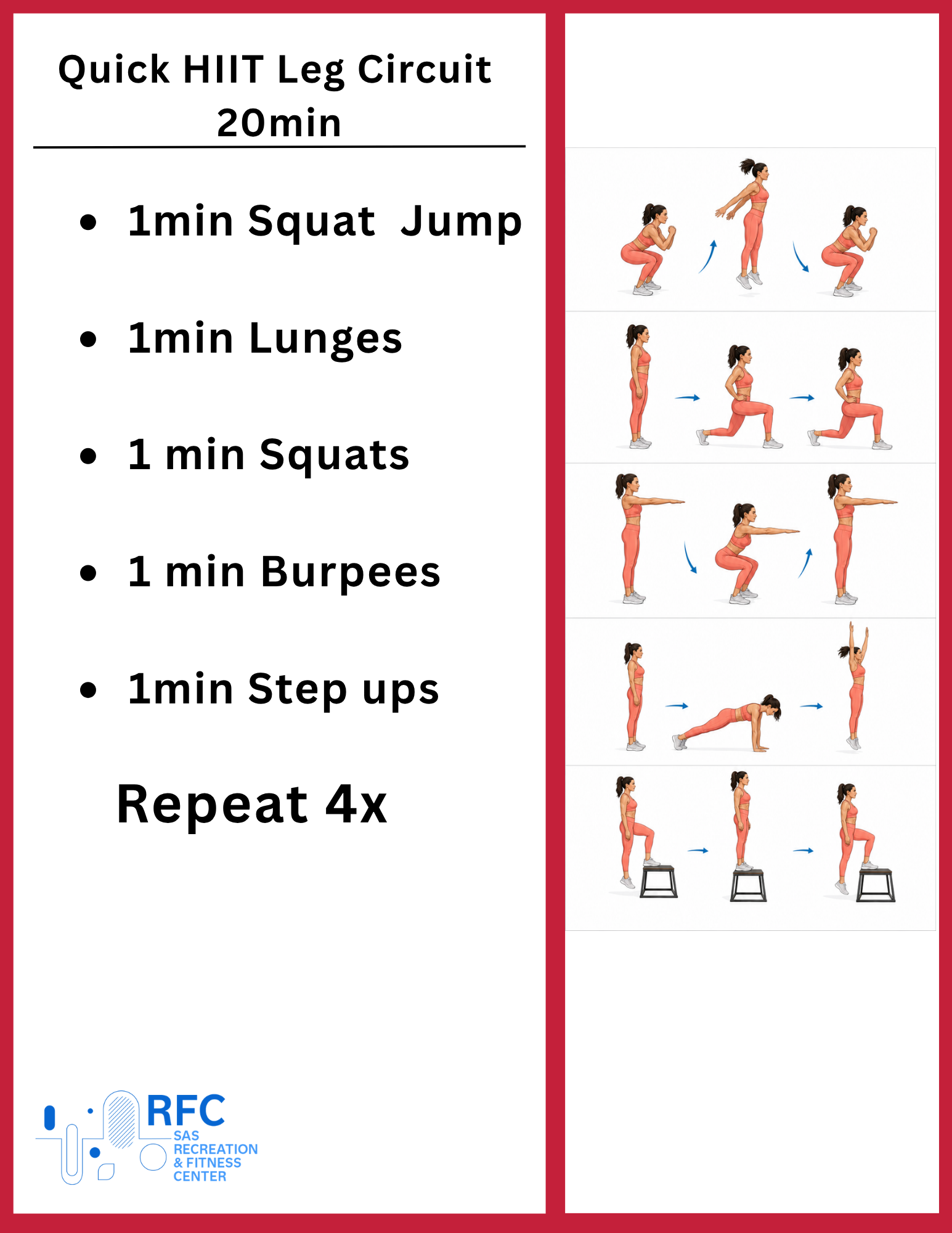
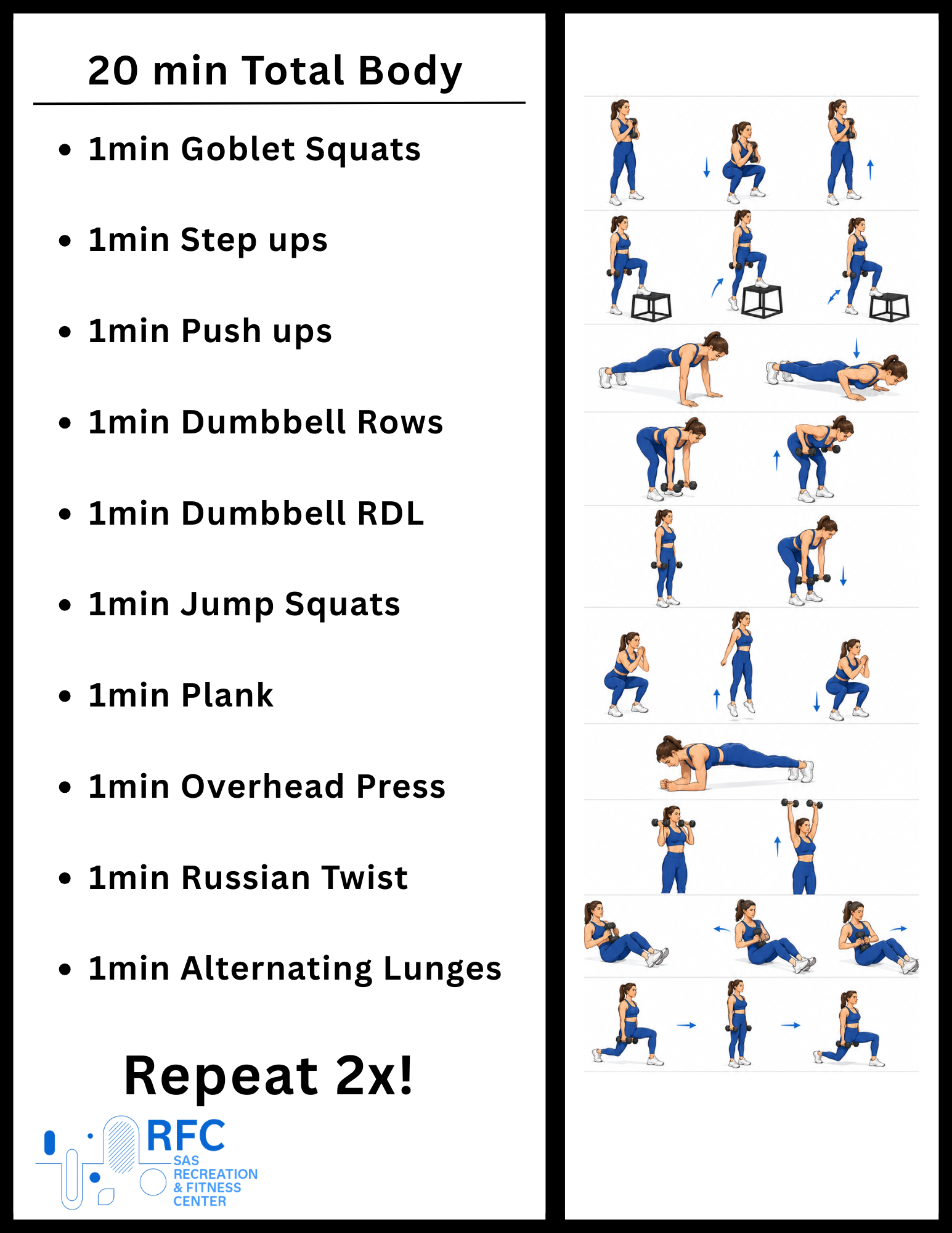
When time is limited, focus on quality over quantity. Instead of spending valuable minutes deciding what to do, go into each exercise with a plan. Challenge yourself on each exercise! If you are only working for 1min each exercise, try to increase the difficulty. You can do this through lifting more, moving faster, or standing on a more unstable surface. See a couple of workout options below.
Sources:
Birinci, Y. Z., Pancar, S., Şimşek, H., Soylu, Y., Konuk, K., & Şahin, Ş. (2026, January 31). Time-dependent comparison of serum BDNF responses following high-intensity interval exercise and moderate- and low-intensity continuous exercise in healthy young men. Nature News. https://www.nature.com/articles/s41598-026-37728-z
Alqahtani, S. M., Al-Kuraishy, H. M., Al Gareeb, A. I., Albuhadily, A. K., Alexiou, A., Papadakis, M., Hemeda, L. R., Faheem, S. A., & El-Saber Batiha, G. (2025, May 17). Unlocking alzheimer’s disease: The role of BDNF signaling in Neuropathology and Treatment. Neuromolecular medicine. https://pmc.ncbi.nlm.nih.gov/articles/PMC12084274/
Karthik Kumar, M. (2021, July 13). Is working out 20 minutes a day enough?. MedicineNet. https://www.medicinenet.com/is_working_out_20_minutes_a_day_enough/article.htm