


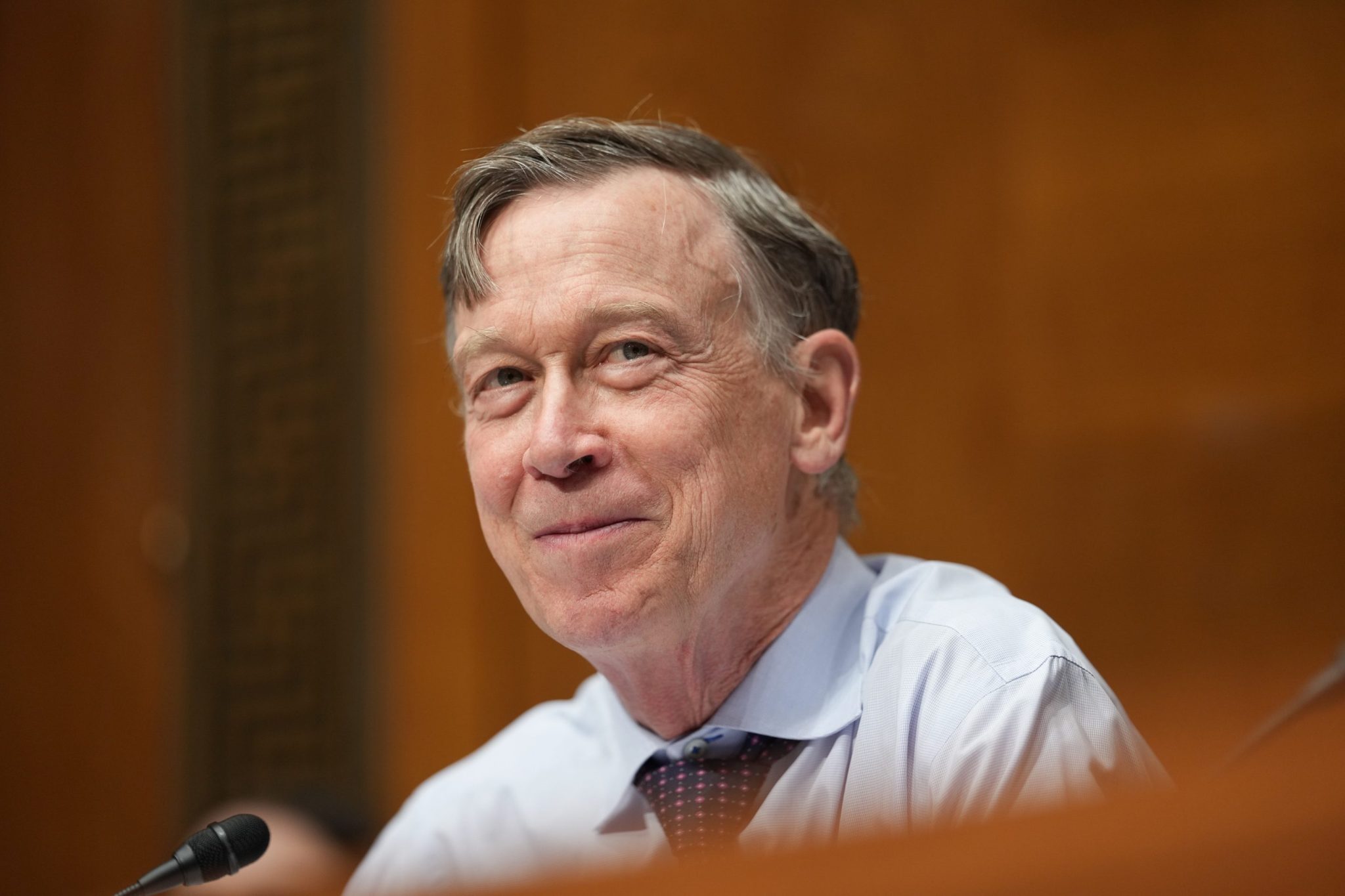
Sen. John Hickenlooper wants American AI to win in the international AI arms race. He just isn’t sure it needs to be able to rebuild itself without limits.
“Maybe we don’t need recursive learning, unlimited,” the Colorado Democrat told Fortune’s Diane Brady on Monday at the Fortune 500 Innovation Forum in Detroit, where he teleconferenced in. He described machines “reinventing themselves sometimes outside the fence line of their domain that they’re supposed to stay in.”
“That should cause real concern,” Hickenlooper said.
Hickenlooper, a member of the Senate Commerce Committee, won his second and last term two weeks ago, leading Republican state Sen. Mark Baisley 61% to 35% on election night. While his seat was expected to go his way, eight seats won Democrats control of the Senate in last Tuesday’s midterm elections, in which data centers and the AI buildout was one of the most referenced issues that influenced voters’ decisions.
His comments come as the buildout continues and as AI companies use their models to speed up their research. In September, more than 20 researchers, including Geoffrey Hinton and Yoshua Bengio, published a paper warning that automating AI research could set off an “intelligence explosion.” Alan Chan, one of its lead coauthors, said that valid safety mechanisms aren’t in place.
Hickenlooper said he isn’t against the labs moving fast. “They are pushing as fast as they can. I understand that, and that’s good,” he said, referencing the international rivalry. “We want to make sure that our frontier AI is the best in the world because it has the potential to dominate the globe.”
He said there are still ways to make sure the U.S. does that safely: for example, there are rules already on the books for other technologies. “We regulate nuclear weapons. We have regulations before an airplane can go into service,” he said. “We need to look at what are some of the fundamental safeguards and guardrails that we should put in place.”
A global arms race
Brady asked about Nvidia and Commerce Secretary Howard Lutnick, following Jensen Huang’s resignation as Nvidia’s CEO last week after reports of an affair with an alleged Chinese spy. The Senate Banking Committee has asked Huang and Lutnick to testify next month. While Hickenlooper said his questions about the case were “not that pressing,” Hickenlooper, who is not part of the committee, said he wants to know the basics first.
“What is our relationship to China, and how secure do we feel in sharing our technology with them at any level?” he said. “Because I don’t feel comfortable with that.”
Hickenlooper backs the Bipartisan American Affordability and Jobs Act to help curb data centers. The permitting bill would speed approvals for energy projects and require data centers to pay for the grid upgrades built to serve them. The Senate voted 73-25 last week to begin debate on it, and President Donald Trump endorsed it.
Hickenlooper said data centers should first guarantee there will be no loud noises or hazards and nuisances in communities. Under the bipartisan bill, the cost of new power lines and substations “will be completely borne by the data center.”
He called the bill a compromise. Trump “doesn’t like wind. He doesn’t like solar,” Hickenlooper said, but the bill would put both on equal footing with natural gas. While the bill has limitations, he said, what it looks like now is one that is “much improved” from where it started.
“I wish we could go further.”
Hickenlooper read the midterm results as a test rather than a win for his party to bank. “It’s not a mandate,” he said. “I think it’s more of a to-do list, almost an audition.” Democrats, he said, have to show they can lower costs and add jobs.
“When you’re trying to get a deal done, you’ve got to figure out who you’re negotiating with,” he said. “You got to see what’s in it for them and find a way that you can both benefit from the final agreement.”