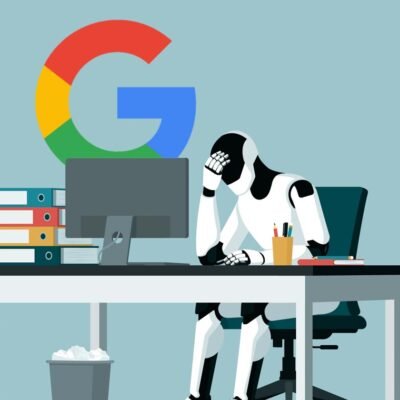


“It’s not a technology problem. It’s a process problem.”
“It’s not an accuracy issue. It’s an adoption issue.”
“It’s not the model. It’s the human.”
Sound familiar? I hear these arguments all the time.
But here’s the reality: generative AI has an accuracy problem. In fact, it is well documented that state-of-the-art agents can have error rates that exceed 25% on complex tasks. And those errors compound across multi-step workflows. An agent operating at 85% accuracy per step may successfully complete a workflow only a fraction of the time.
For critical, high-stakes business decisions, these outcomes simply aren’t good enough.
So why are organizations racing to deploy AI?
Because when it works, it’s remarkable. A model generates a compelling answer. An agent completes an intricate task. A process that once took months now takes hours.
These moments create excitement, opportunity and urgency. They show us what’s possible when AI is embedded into a business. But they also create a temptation to focus on AI’s potential – without fully addressing its limitations.
That’s where the trust gap emerges.
Once the result is accurate, consistent and repeatable, the trust gap disappears.
The first challenge is knowing when to use an agent and when not to. Many organizations assign agents to tasks that simply require standard automation with precision and determinism. As a result, they create unnecessary complexity and cost to achieve the same goal.
So when should we consider agents?
Today, agents deliver the greatest value when applied to goal-oriented tasks with complex workflows. In these scenarios, human expertise is still essential for evaluating results and overcoming errors introduced by non-deterministic behavior. This oversight can be achieved through human-in-the-loop review or by embedding domain expertise into agentic workflows.
Ultimately, trust is earned through the accuracy and repeatability of results. Whether organizations use an agentic workflow or standard automation, once the result is accurate, consistent and repeatable, the trust gap disappears.
Agents deliver the greatest value when applied to goal-oriented tasks with complex workflows. In these scenarios, human expertise is still essential for evaluating results and overcoming errors introduced by non-deterministic behavior.
This is the goal. And it requires strong leadership to invest in a persistent technology strategy while ensuring people remain at the center of oversight and governance. Organizations that do this successfully will overcome the trust barrier, achieve groundbreaking outcomes, and gain a competitive advantage in the market with AI.
Only then can we confidently say, “It’s not a technology problem.”