


Key takeaways
- Hootsuite is the strongest Sprout Social alternative for enterprise teams that need publishing, analytics, social listening, and compliance tools in one platform.
- Most teams explore Sprout Social competitors because of per-seat pricing that scales quickly, limited social listening at lower tiers, or the need for stronger enterprise governance.
- The best alternative depends on your team size, budget, required integrations, and whether you need enterprise-grade features like approval workflows and compliance controls.
- This guide compares 9 Sprout Social alternatives on features, pricing, ratings, and ideal use cases to help you make the right choice in 2026.
Why do teams look for Sprout Social alternatives?
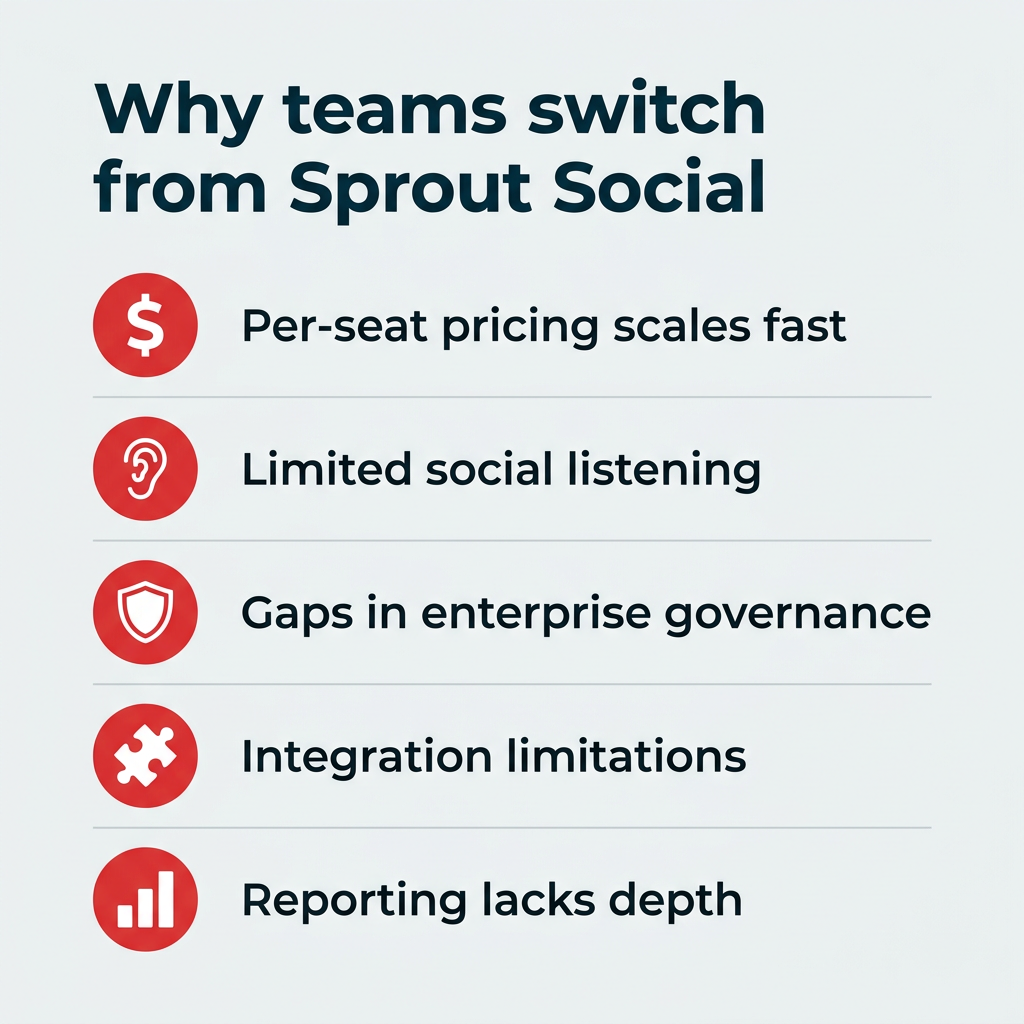
Teams look for Sprout Social alternatives primarily due to escalating per-seat pricing, limited social listening at lower tiers, and gaps in enterprise governance features. As organizations scale their social media operations (now a $33.46 billion market), several common pain points tend to surface:
- Per-seat pricing: Sprout Social charges per user, and costs escalate quickly as you add team members. For larger marketing teams, this can make the platform significantly more expensive than alternatives with more flexible pricing models.
- Social listening limitations: Access to Sprout Social’s listening features requires a premium plan, which puts competitive intelligence and sentiment analysis out of reach for teams on standard plans.
- Enterprise governance gaps: Teams in regulated industries or large organizations often need robust approval workflows, compliance controls, and audit trails that Sprout Social doesn’t offer as comprehensively as some competitors.
- Integration limitations: Some teams find that Sprout Social’s integrations with their existing tech stack (CRM, BI tools, DAM platforms) are either limited or require higher-tier plans.
- Reporting depth and customization: While Sprout Social offers solid analytics, some teams need more granular, customizable reporting, especially for cross-platform ROI measurement and executive-level dashboards.
These are the kinds of friction points that typically trigger a market scan, and they’re worth keeping in mind as you evaluate the alternatives below.
Sprout Social competitors at a glance
Before diving into the details, here’s a quick comparison of the top Sprout Social alternatives covered in this guide:
|
Tool |
Best for |
Starting price (2026) |
G2 rating |
Key differentiator |
|---|---|---|---|---|
|
Hootsuite |
Enterprise teams and regulated industries |
$99/user/month |
4.3/5 |
Talkwalker-powered social listening, OwlyWriter AI, enterprise governance |
|
Agorapulse |
Mid-size marketing teams |
$79/user/month |
4.5/5 |
Unified social inbox with built-in ROI tracking |
|
Buffer |
Small teams and creators |
Free (paid from $6/month/channel) |
4.3/5 |
Simple, affordable scheduling and analytics |
|
Later |
Visual content creators |
$25/month |
4.5/5 |
Visual content calendar and Instagram-first planning |
|
Zoho Social |
Teams in the Zoho ecosystem |
$10/month |
4.6/5 |
Deep Zoho CRM integration |
|
Sendible |
Agencies |
$29/month |
4.5/5 |
White-label reporting and multi-client management |
|
Sprinklr |
Large enterprises |
$299/month |
4.3/5 |
Unified CXM platform across 30+ channels |
|
Khoros |
Multinational corporations |
Custom pricing |
3.8/5 |
Community management and compliance controls |
|
HubSpot |
Teams already using HubSpot CRM |
$890/month (Marketing Hub Professional) |
4.4/5 |
CRM-integrated social as part of a full marketing suite |
Note: Pricing reflects publicly available information as of early 2026 and may vary based on plan tier, billing cycle, and team size. G2 ratings are approximate and subject to change.
9 best Sprout Social alternatives in 2026
Each of the tools below offers a different approach to social media management. We’ve organized them with consistent details on features, pricing, ratings, and how they compare to Sprout Social so you can evaluate them side by side.
Hootsuite
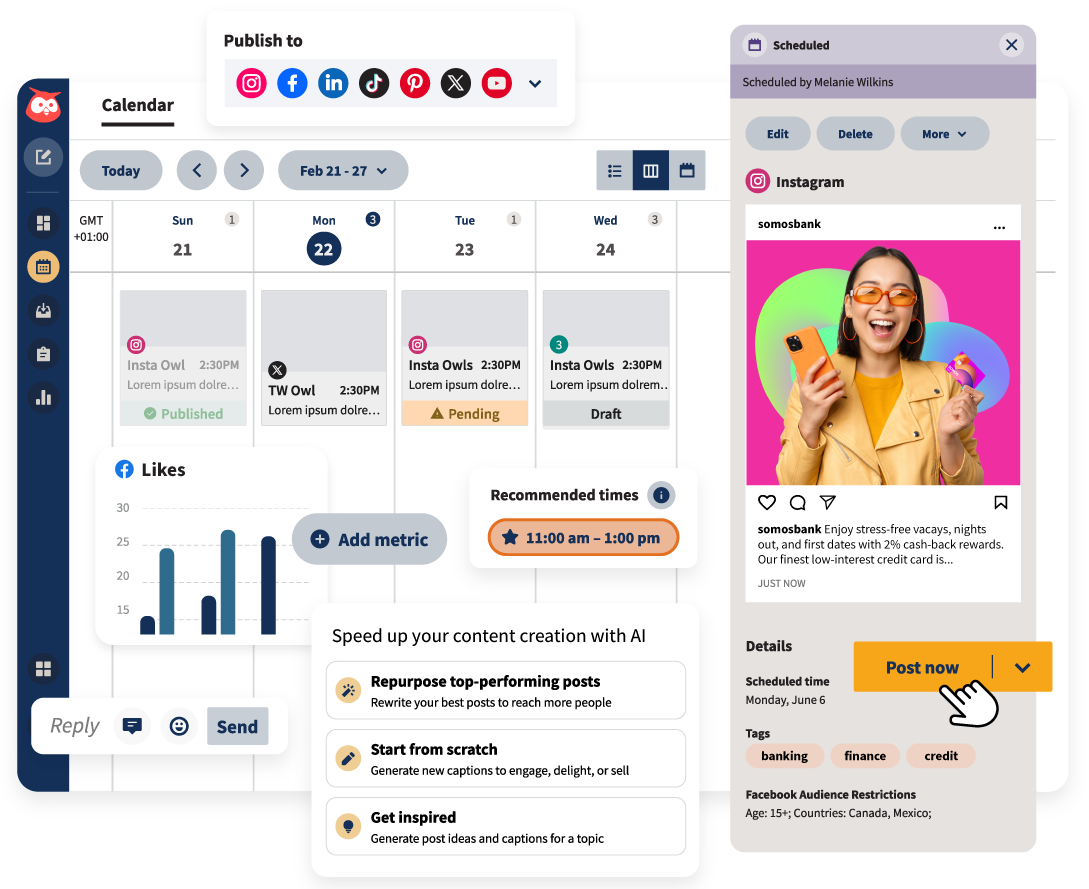
Watch how Hootsuite helps enterprise teams manage social media at scale.
Hootsuite is the most comprehensive Sprout Social alternative for teams that need enterprise-grade publishing, analytics, social listening, and governance in a single platform. It supports Facebook, Instagram, X (formerly Twitter), LinkedIn, TikTok, Pinterest, and YouTube (platforms reaching nearly 5.75 billion users) from one dashboard.
With Hootsuite, you get:
- An easy-to-use social media scheduler with personalized recommendations for best times to post
- OwlyWriter AI for generating captions, content ideas, and repurposing top-performing posts
- Intuitive analytics for all your social accounts, including industry benchmarks and competitor analysis
- Talkwalker-powered social listening for competitive intelligence, trend detection, and sentiment analysis
- One unified inbox for DMs and comments from every network
- Integrations with 100+ tools, including Salesforce, Adobe, Microsoft, Canva, Grammarly, and Mailchimp
- Enterprise governance features including approval workflows, compliance controls, and audit trails
Hootsuite is well-known as the go-to social media management tool for teams concerned about security and compliance. If you work in a regulated industry like finance or healthcare, this matters. It’s actually quite hard to find a social tool that integrates with your existing compliance and auditing tools out of the box.
Read our tips for social media security and social media compliance.
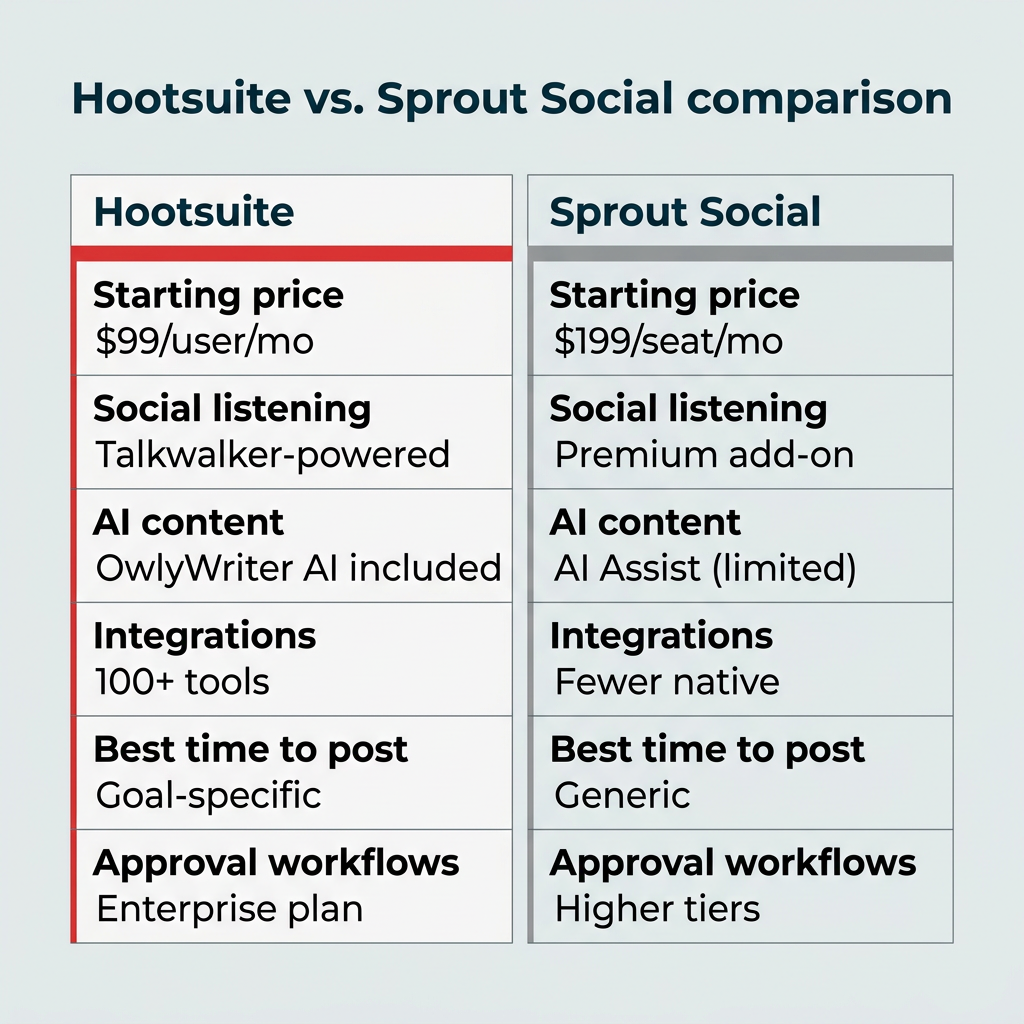
How Hootsuite compares to Sprout Social:
|
Feature |
Hootsuite |
Sprout Social |
|---|---|---|
|
Starting price |
$99/user/month |
$199/seat/month (billed annually) |
|
Social listening |
Talkwalker-powered (Enterprise plan) |
Premium add-on |
|
AI content generation |
OwlyWriter AI (included) |
AI Assist (limited tiers) |
|
Approval workflows |
Available on Enterprise plan |
Available on higher tiers |
|
Integrations |
100+ including Salesforce, Adobe |
Fewer native integrations |
|
Best time to post |
Goal-specific recommendations |
Generic recommendations |
G2 rating: 4.3/5
Good for: Enterprise marketing teams, social pros in regulated industries, agencies, and organizations managing multiple brands or regions.
Pricing: Plans start at $99/user/month (Standard). Advanced and Enterprise plans are available at higher tiers. Enterprise plans with custom pricing include Talkwalker listening, employee advocacy (Amplify), SSO, and more. See full pricing here.
More info: Hootsuite vs. Sprout Social

Agorapulse
Agorapulse is a solid mid-market alternative to Sprout Social, particularly for marketing teams that want a clean, unified social inbox and straightforward reporting without enterprise-level complexity.
Key features include:
- Unified social inbox: Consolidates comments, messages, and mentions across platforms
- Built-in social ROI tracking: Connects social activity to website conversions
- Social listening: Monitors brand mentions, competitor tracking, and industry keywords
- Intuitive content calendar: Includes scheduling, queuing, and approval workflows
- Team collaboration tools: Assignment and labeling features
Agorapulse doesn’t offer the same depth of social listening or enterprise governance as Hootsuite or Sprinklr, but it’s a strong choice for mid-size teams that want a capable, user-friendly platform at a lower price point than Sprout Social.
G2 rating: 4.5/5
Good for: Mid-size marketing teams, in-house social teams, and small agencies.
Pricing: Plans start at $79/user/month. A limited free plan is available for individuals.
Buffer

Buffer‘s streamlined interface focuses on simple post scheduling and basic analytics.
Buffer is one of the most straightforward social media management tools on the market, and it’s a popular Sprout Social alternative for small teams and individual creators who need simple scheduling and analytics without the complexity (or cost) of an enterprise platform.
With support for major platforms including Facebook, X, Instagram, LinkedIn, and Pinterest, Buffer lets you queue up posts to be published at specific times. A built-in analytics feature monitors standard metrics like likes, shares, and engagement. Buffer also includes tools to help you find and share relevant content from trusted sources within your industry.
Where Buffer falls short compared to Sprout Social or Hootsuite is in depth. It lacks robust social listening, enterprise governance features, and advanced reporting. For teams that need those capabilities, Buffer likely won’t be enough on its own.
G2 rating: 4.3/5
Good for: Small businesses, startups, content creators, and solo marketing professionals.
Pricing: Free plan available for up to 3 channels. Paid plans with more robust analytics start from $6/month per channel.
Later

Later‘s drag-and-drop visual calendar helps you plan Instagram grid aesthetics.
Later is a social media scheduling and management tool that stands out for its focus on visual content. While it doesn’t offer the same depth of features as Sprout Social or Hootsuite, it can be a strong fit for brands that rely heavily on Instagram and visual storytelling.
Later specializes in helping you plan and schedule image and video posts with a user-friendly visual content calendar. You can preview your Instagram feed, rearrange the order of posts, and visually plan the aesthetic and layout of your grid. Later’s link-in-bio tool lets you create a clickable, customizable landing page that resembles your Instagram feed. The platform has also expanded beyond Instagram to support TikTok, Facebook, Pinterest, LinkedIn, and X.
For enterprise teams or those needing advanced analytics, social listening, or compliance tools, Later will likely feel limited. But for visual-first brands and creators, it’s a focused, affordable option.
G2 rating: 4.5/5
Good for: Instagram influencers, e-commerce businesses, visual content creators.
Pricing: Plans start at $25/month. Higher-tier plans with advanced analytics and additional users are available.
Zoho Social
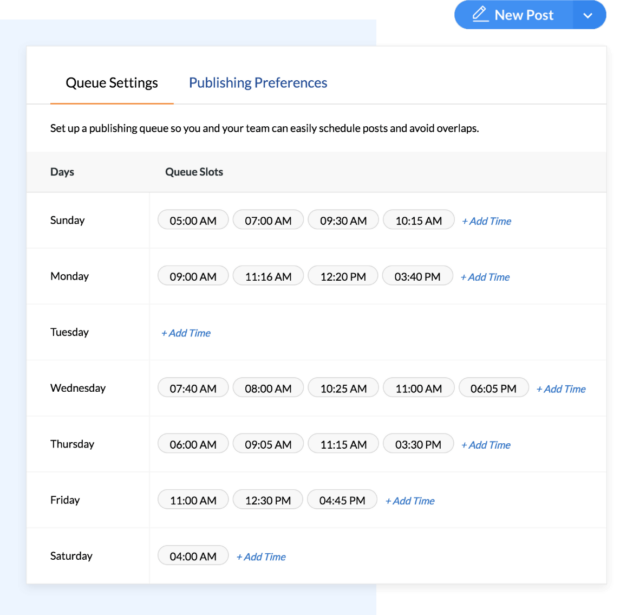
Zoho Social‘s queue settings integrate seamlessly with other Zoho products.
It’s a centralized platform that allows social media managers to juggle multiple social media accounts in one place. Its biggest advantage is its deep integration with the broader Zoho ecosystem.
If you’re already a Zoho CRM user, Zoho Social connects directly with the application and gives you a holistic view of customer engagement across different platforms. You can schedule and publish posts, monitor mentions and comments, engage with your audience, and analyze performance from a single dashboard. Zoho’s social listening features let you monitor keywords, hashtags, and mentions related to your brand or industry.
The main limitation is that Zoho Social’s feature set is more modest than Sprout Social or Hootsuite when it comes to enterprise-grade analytics, social listening depth, and governance. It’s best suited for teams already invested in the Zoho ecosystem who want to keep their tools consolidated.
G2 rating: 4.6/5
Good for: Small to medium-sized businesses that already use Zoho CRM.
Pricing: Entry-level (Standard) plans start at $10/month. Higher tiers (Professional and Premium) are available at additional cost. Verify current pricing on Zoho’s official pricing page.
Sendible
Sendible is a social media management platform built with agencies in mind. If you manage social media for multiple clients, Sendible’s white-label reporting and client management features make it a practical Sprout Social alternative at a lower price point.
Key features include:
- White-label reports: Customize reports with your agency’s branding
- Centralized dashboard: Manage multiple client accounts from one place
- Content scheduling: Includes approval workflows and a shared content library
- Built-in Canva integration: Design posts without leaving the platform
- Basic social listening: Monitor brand mentions and keywords
Sendible doesn’t match the enterprise depth of Hootsuite or Sprinklr, and its analytics are more basic than what Sprout Social offers. But for agencies that need efficient multi-client management at an affordable price, it’s a strong contender.
G2 rating: 4.5/5
Good for: Digital marketing agencies, freelance social media managers, and teams managing multiple client accounts.
Pricing: Plans start at $29/month. Agency-tier plans with additional users and features are available at higher tiers.
Sprinklr

Sprinklr‘s unified platform consolidates customer interactions across 30+ channels.
Sprinklr is a unified customer experience management (CXM) platform that covers social media, customer care, marketing, and more. It’s designed for large enterprises and organizations that need to consolidate customer interactions across 30+ channels into one place.
Sprinklr’s deep, complex functionality allows users to manage customer inquiries, access actionable insights, measure key performance indicators, and create personalized experiences by segmenting and targeting specific audience groups. Its AI-powered analytics and automation capabilities are extensive.
The trade-off is complexity. Sprinklr typically requires significant implementation time and dedicated resources to get up and running. For teams that don’t need that level of scale, it can feel like overkill compared to Sprout Social or Hootsuite.
G2 rating: 4.3/5
Good for: Enterprise-level businesses, global brands, and organizations managing customer experience across many channels.
Pricing: Plans start at $299/month for the Social Self-Serve tier. Enterprise pricing is custom and typically requires a sales conversation.
Khoros

Khoros combines social media management with robust content governance features.
The comprehensive platform combines social media management, customer care, community management, and marketing automation. It’s built for large organizations that need to manage social at scale while maintaining strict content governance.
Khoros offers multi-channel support across platforms like Facebook, X, LinkedIn, Instagram, and others. A robust content library helps with content planning and scheduling, while social listening tools and sentiment analysis features let brands track mentions and customer opinions. Integration with Khoros’ customer care functionalities allows you to handle customer inquiries, complaints, and support requests in one place.
One particular strength is Khoros’ features for adherence to strict content guidelines, whether those are industry-wide regulations or in-house brand voice standards. The main drawback is pricing transparency. Khoros doesn’t publish pricing publicly, which can make it harder to evaluate during an initial comparison.
G2 rating: 3.8/5
Good for: Multinational corporations, customer support and service teams, and organizations with strict compliance requirements.
Pricing: Custom pricing, available on request.
HubSpot
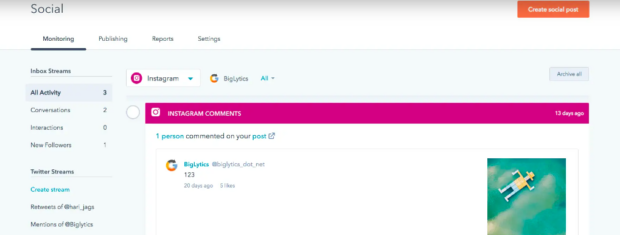
HubSpot‘s social inbox integrates directly with customer relationship data in the CRM.
HubSpot’s social media management tool is a module within its broader Marketing Hub, not a standalone social media platform. That distinction matters. If your team already uses HubSpot CRM, the integration between social interactions and customer relationship data can be genuinely valuable. If you don’t use HubSpot, the social tools alone probably aren’t worth the price of entry.
Users can schedule and publish content, monitor engagement, and track performance across Facebook, Instagram, X, and LinkedIn. HubSpot’s social tools also include social listening capabilities for monitoring brand mentions, keywords, and industry trends. Analytics track metrics such as engagement, reach, clicks, and conversions, all tied back to your CRM data.
The social media features are solid but not as deep as what you’d get from a dedicated platform like Hootsuite or Sprout Social. Think of HubSpot’s social tools as a strong complement to an existing HubSpot investment, not a standalone Sprout Social replacement.
G2 rating: 4.4/5
Good for: Content marketers, inbound marketing agencies, and teams that already use HubSpot CRM.
Pricing: Social media tools are included in HubSpot’s Marketing Hub Professional plan, which starts at $890/month (includes 3 seats). Social is not available as a standalone purchase.
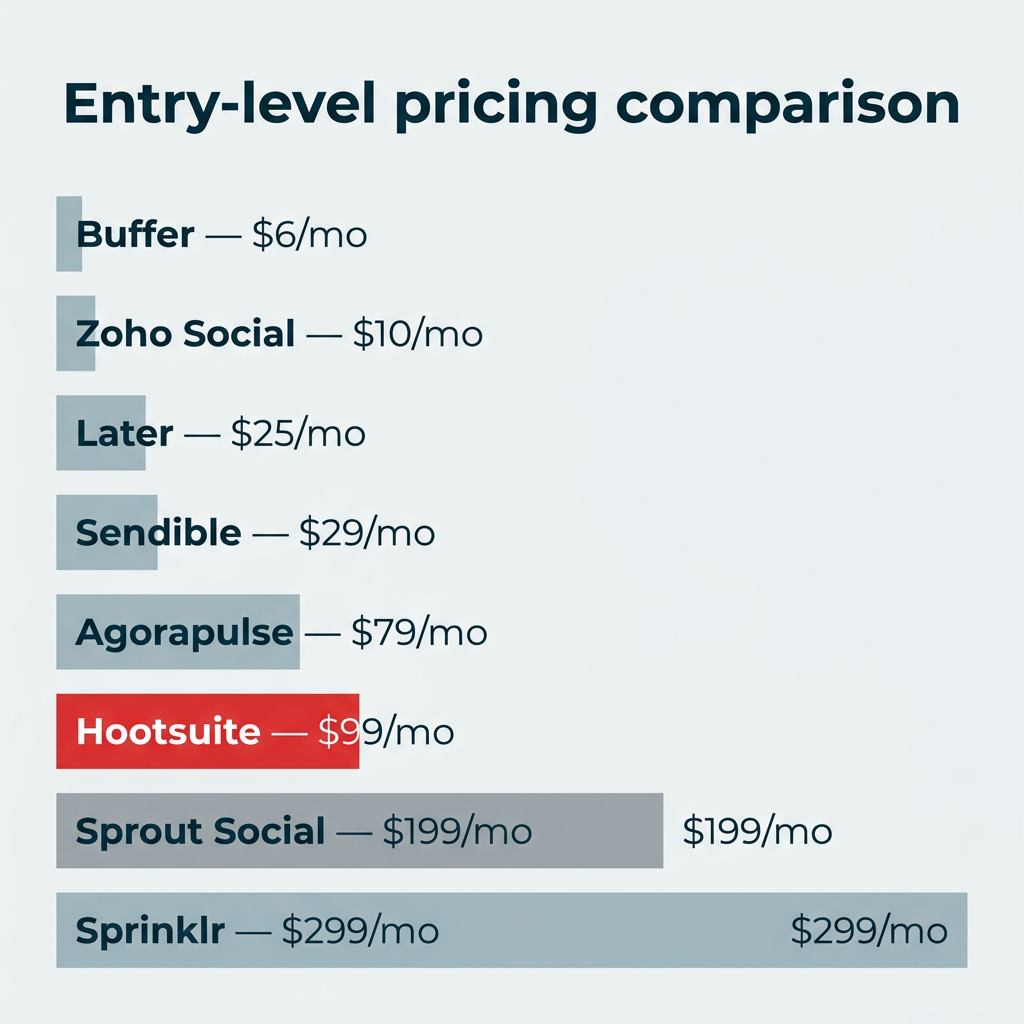
How do the top Sprout Social alternatives compare on pricing?
Most Sprout Social alternatives are significantly cheaper at entry-level pricing, with Hootsuite starting at $99/user/month compared to Sprout Social’s $199/seat/month. Sprout Social’s costs climb quickly as you add users or move to higher tiers for features like social listening.
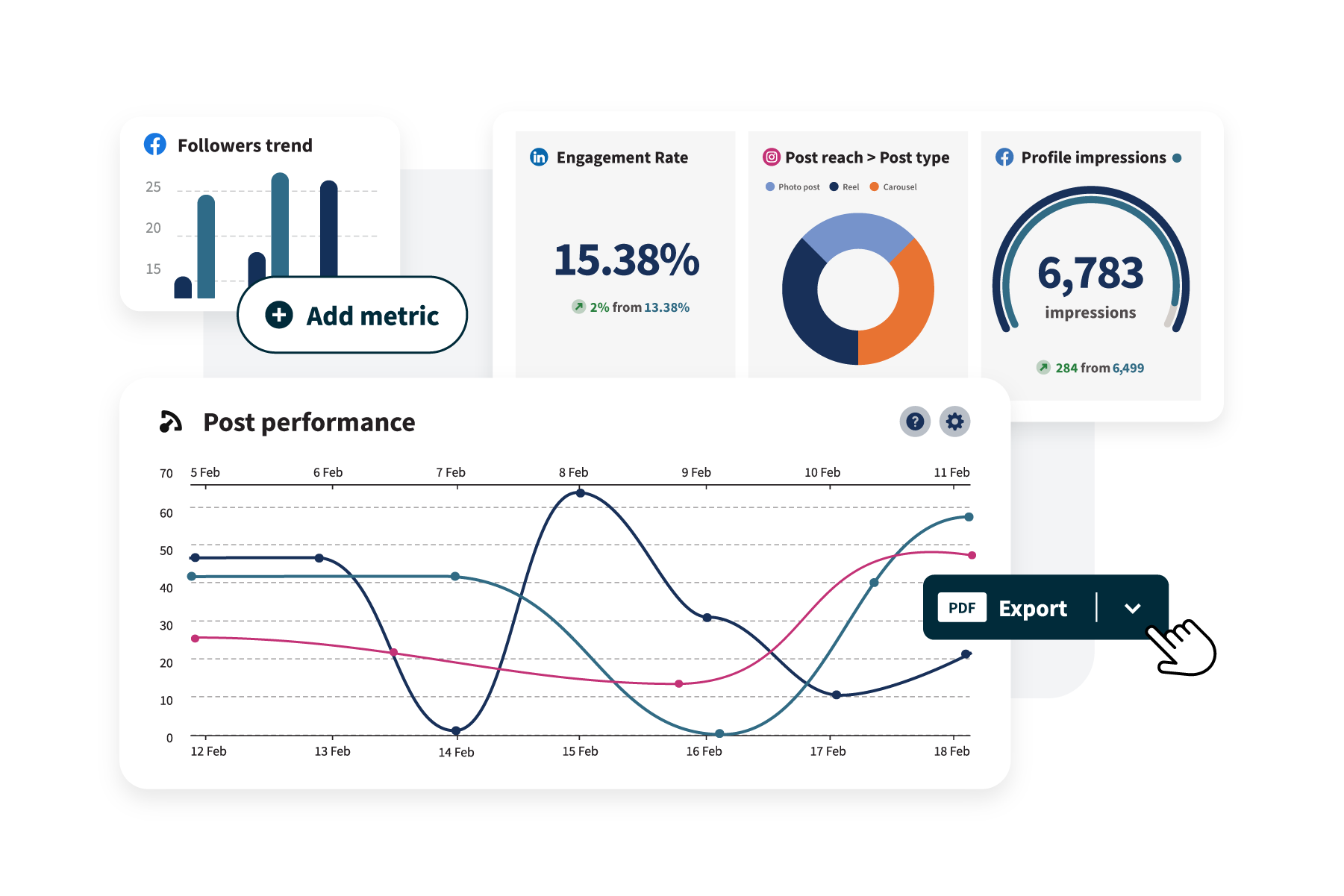
Here’s how the alternatives stack up:
|
Tool |
Entry-level price |
Pricing model |
Free plan or trial? |
|---|---|---|---|
|
Hootsuite |
$99/user/month |
Per user |
30-day free trial |
|
Agorapulse |
$79/user/month |
Per user |
Limited free plan |
|
Buffer |
$6/month/channel |
Per channel |
Free plan (3 channels) |
|
Later |
$25/month |
Flat rate (limited users) |
14-day free trial |
|
Zoho Social |
$10/month |
Flat rate (limited users) |
Free trial available |
|
Sendible |
$29/month |
Flat rate (limited users) |
14-day free trial |
|
Sprinklr |
$299/month |
Per seat (Self-Serve) |
Demo available |
|
Khoros |
Custom |
Custom |
Demo available |
|
HubSpot |
$890/month (Marketing Hub) |
Per seat (3 included) |
Free tools available |
Pricing reflects publicly available information as of early 2026. Verify current pricing directly with each vendor.
The bottom line: Most alternatives on this list are cheaper than Sprout Social at the entry level. Hootsuite, in particular, offers comparable enterprise-grade features starting at $99/user/month, which is about half of Sprout Social’s starting price of $199/seat/month (billed annually). For teams scaling beyond a few seats, the per-user cost difference adds up significantly.
How do you choose the right Sprout Social alternative for your team?
The right Sprout Social alternative depends on your team’s size, goals, tech stack, and how you expect your social media operations to evolve. Here’s a structured approach to making the decision.
What goals and features should you define first?
Start by getting clear on what you actually need. Without specific objectives, it’s hard to evaluate whether a platform’s features justify the cost.
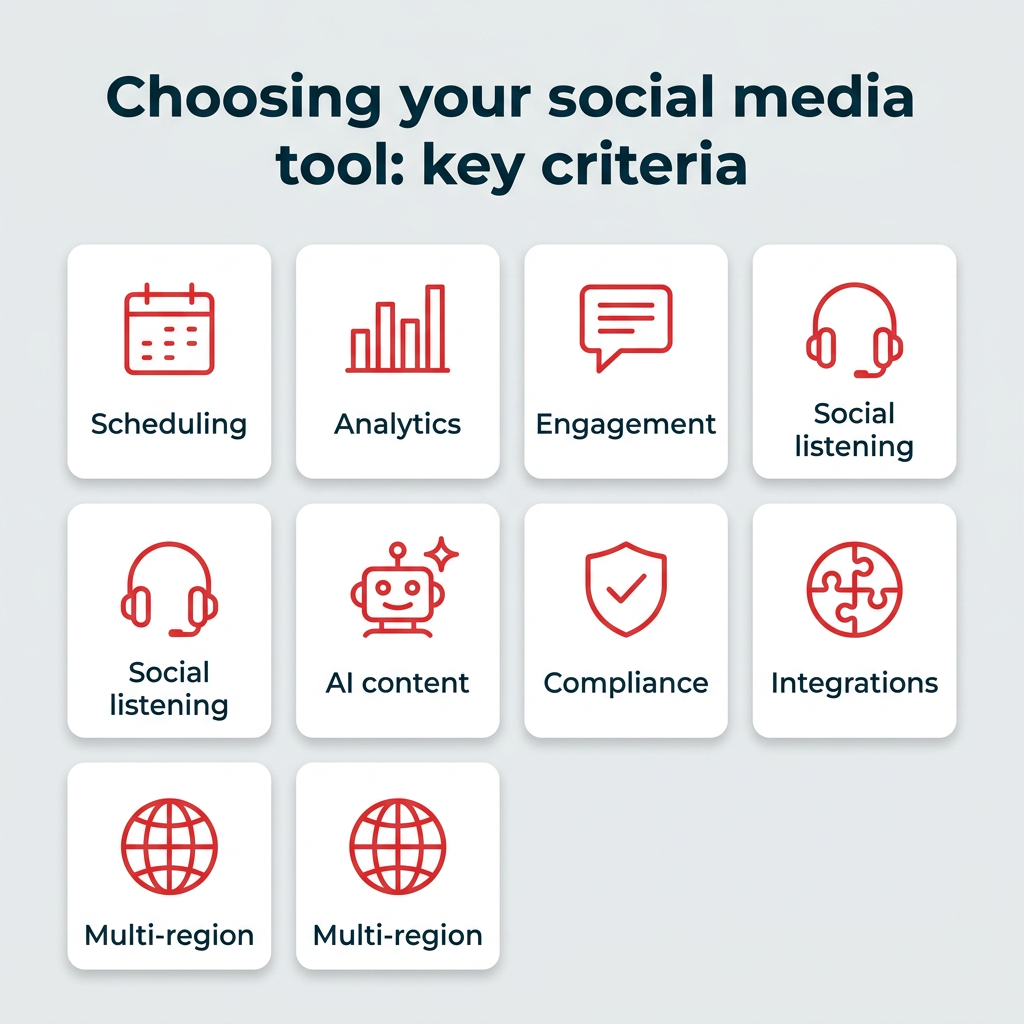
Consider what matters most for your team:
- Post scheduling and content calendar
- Analytics, reporting, and ROI measurement
- Customer engagement and inbox management
- Social listening and competitive intelligence
- AI content generation and automation
- Approval workflows and compliance controls
- Multi-brand or multi-region support
- Integration with your existing tech stack (CRM, BI, DAM)
Separate your “must-haves” from your “nice-to-haves” before you start comparing platforms. This keeps you from getting distracted by features that look impressive but don’t serve your social media strategy.
Read our guide to setting (and exceeding) social media goals to help you define your own.
How should you evaluate team size, accounts, and budget?
The cost of social media management tools varies widely depending on your team size, the number of accounts you manage, and the depth of analytics you need.
Before comparing platforms, take stock of:
- How many users or collaborators need dashboard access
- How many social accounts you’re managing (and across how many brands or regions)
- Your total budget for social media tooling, including any point solutions you might consolidate
- Whether per-seat pricing or flat-rate pricing works better for your team’s growth trajectory
A platform that looks affordable for three users can become expensive at fifteen. Model out the total cost of ownership at your current team size and where you expect to be as you scale your content operations over the next 12 to 18 months.
Not sure who you’re trying to reach with your social content? Here’s a guide to identifying your target audience.
How should you check reviews, request demos, and run a pilot?
Other teams have already evaluated these platforms. Take advantage of their experience by checking reviews and ratings on sites like TrustRadius and G2, as well as analyst reports like Gartner’s 2025 Market Guide. Pay attention to both positive and negative feedback to get a well-rounded perspective on each platform’s strengths and weaknesses.
For your top two or three contenders:
- Request a guided demo from the vendor’s sales team
- Involve stakeholders from marketing, compliance, IT, and customer service to ensure the platform meets cross-functional needs
- Run a pilot program with a small team to test real-world workflows before committing to an enterprise contract
- Test key features that matter most to your use case, such as approval workflows, reporting, or social listening
A hands-on trial period gives you the clearest picture of how a platform will actually work for your team.
Frequently asked questions
What is the best Sprout Social alternative for enterprise teams?
The best Sprout Social alternative for enterprise teams is Hootsuite. Hootsuite offers enterprise-grade publishing, Talkwalker-powered social listening, OwlyWriter AI for content generation, and robust governance features including approval workflows, compliance controls, and audit trails. It starts at $99/user/month compared to Sprout Social’s $199/seat/month, making it a more cost-effective option for large teams.
Why do teams switch from Sprout Social to other platforms?
Teams switch from Sprout Social primarily because of escalating per-seat pricing, limited social listening features at lower tiers, and gaps in enterprise governance capabilities. As teams scale and add more users, Sprout Social’s per-seat pricing model becomes significantly more expensive than alternatives with more flexible pricing structures.
Which Sprout Social alternative is best for small teams and startups?
Which Sprout Social alternative is best for small teams depends on your priorities. Buffer is the most affordable option for simple scheduling and analytics, with a free plan for up to 3 channels and paid plans from $6/month per channel. Later is ideal for visual content creators focused on Instagram, starting at $25/month. Zoho Social offers the lowest entry point at $10/month and is best for teams already using Zoho CRM.
Does Hootsuite include social listening like Sprout Social?
Yes, Hootsuite includes social listening through its Talkwalker-powered integration, available on Enterprise plans. This provides competitive intelligence, trend detection, sentiment analysis, and brand monitoring. Sprout Social also requires a premium add-on for social listening features, so both platforms reserve advanced listening capabilities for higher tiers.
What should I look for when comparing Sprout Social alternatives?
When comparing Sprout Social alternatives, evaluate your team size and budget, required features (publishing, analytics, listening, governance), integration needs with your existing tech stack, pricing model (per-seat vs. flat-rate), and whether you need enterprise-grade capabilities like approval workflows and compliance controls. Test your top contenders with hands-on demos and pilot programs before committing.
Are there free alternatives to Sprout Social?
Yes, there are free alternatives to Sprout Social with limited features. Buffer offers a free plan for up to 3 social channels with basic scheduling and analytics. Agorapulse provides a limited free plan for individuals. HubSpot has free tools, though the full social features require the Marketing Hub Professional plan. However, none of these free plans match the depth of features available in paid Sprout Social or Hootsuite plans.
Save time managing your social media marketing strategy with Hootsuite. Publish and schedule posts, find relevant conversions, measure results, and more — all from one dashboard. Try it free today.